
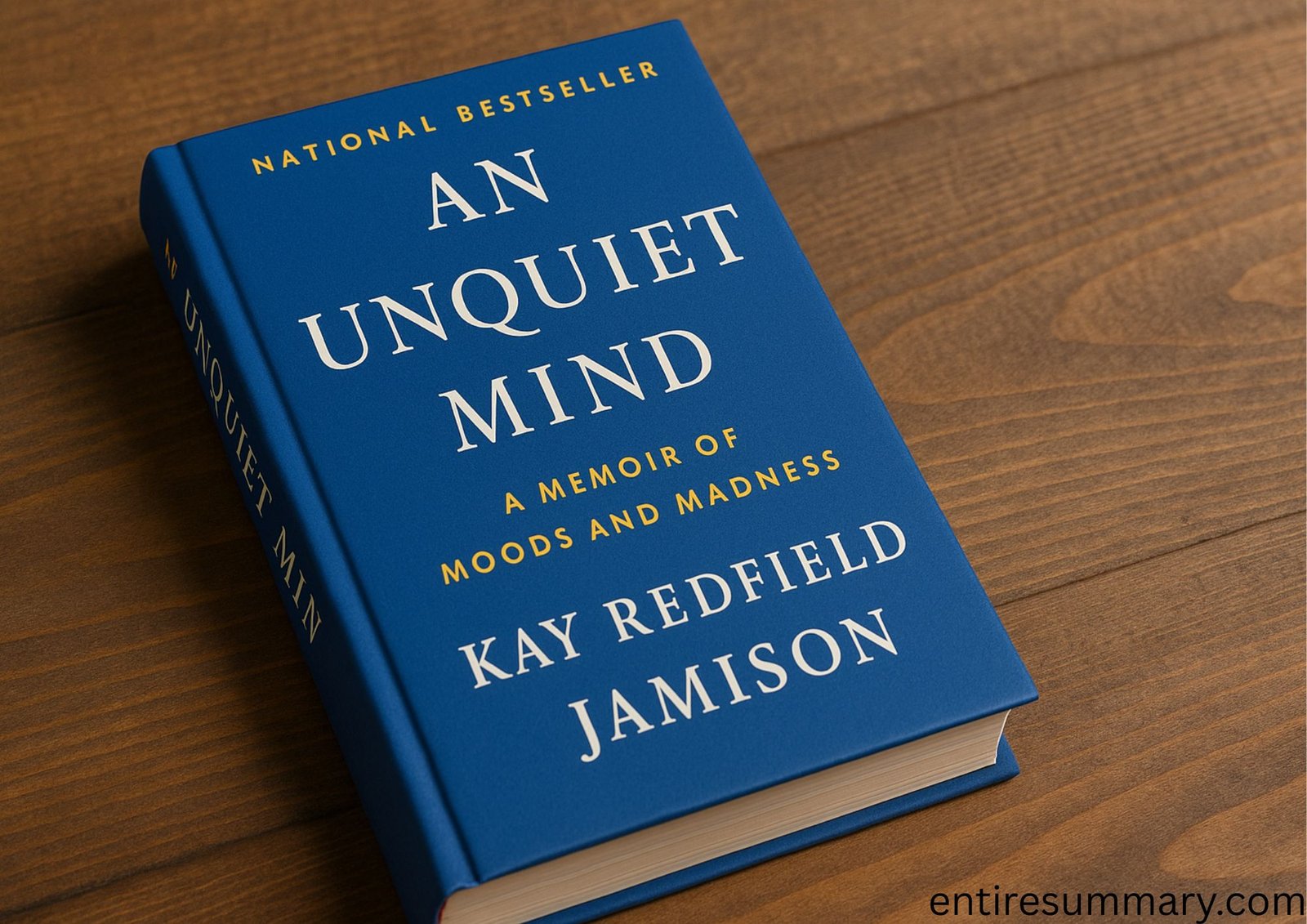
Kay Redfield Jamison’s memoir, An Unquiet Mind, is a rare and powerful book. It’s not just a clinical case study; it’s a deeply personal account of her life as a brilliant psychiatrist and a person living with manic-depressive illness, now known as bipolar disorder. This book is a landmark in psychiatric literature because it bravely pulls back the curtain on a often misunderstood condition, showing us the world through the eyes of someone who lives with it every day. It’s an honest, elegant, and often painful look at the highs and lows of a life defined by extremes.
The Allure and the Abyss of Mania
In the first half of An Unquiet Mind, Jamison introduces us to the chaotic and beautiful world of her mind. From a young age, she recalls a sense of intense emotion and an almost boundless energy. She describes the euphoric highs of her manic episodes with a poet’s touch. These periods are characterized by heightened creativity, boundless ideas, and a feeling of being able to conquer the world. She discusses how this state felt exhilarating and even productive, fueling her academic success and a rapid-fire intellect that impressed her peers and professors.
- Early Signs and the Family’s Influence: Jamison traces the first signs of her illness back to her late teens. She recounts a family history marked by similar emotional volatility, and she shares anecdotes from her childhood that, in hindsight, point toward her developing condition. Her father’s own struggles with mental health are a significant part of this narrative, showing how her illness was both an individual battle and a family legacy.
- The Academic and Professional Journey: The book meticulously documents her path through academia, from her undergraduate studies at UCLA to her a career as a professor of psychiatry. She describes how her intellectual brilliance often masked the underlying chaos. She was able to function and excel professionally, but at a great personal cost, often battling debilitating depression and dangerous manic episodes behind the scenes.
- The Crash into Depression: The memoir makes it clear that the exhilarating highs of mania always came with an inevitable and devastating crash. Jamison vividly describes the soul-crushing lows of her depressive episodes. These are periods of profound despair, exhaustion, and a complete lack of interest in life. She explains how these depressive states were not just a feeling of sadness but a physical and mental paralysis that made it impossible to function.

Navigating Treatment and Finding a Path Forward
The second half of An Unquiet Mind details Jamison’s journey toward diagnosis and treatment. This is where the narrative becomes a powerful advocate for mental health awareness and the importance of medical intervention. She shares her personal struggles with accepting her diagnosis and the difficult process of finding the right medication and therapy.
- The Lithium Revelation: A pivotal moment in the book is when she is finally diagnosed and begins taking lithium. While she initially resists the idea of medication, she describes how it finally gave her a sense of stability. She recounts the complex relationship she had with the drug, appreciating its ability to control her manic episodes but also mourning the loss of the creative energy that sometimes came with them.
Also read: /the-man-who-mistook-his-wife-for-a-hat/
- The Struggle with Adherence: Jamison is honest about her own resistance to staying on her medication. She talks about the common experience of people with bipolar disorder who stop taking their medication when they feel well. She details her own dangerous decision to go off lithium and the ensuing manic episode that led to a serious suicide attempt, a moment that serves as the book’s most powerful warning.
- Finding a Professional and Personal Balance: The book concludes with a sense of hard-won peace. Jamison discusses how she has learned to manage her illness with a combination of medication, therapy, and self-awareness. She highlights the importance of her marriage and her professional work in giving her life meaning and purpose. She shows that living with bipolar disorder isn’t about being “cured” but about learning to live a full and productive life while managing a chronic condition.
Key Takeaways from An Unquiet Mind
- Jamison’s story is a powerful testament that a person’s character is not defined by their mental illness. She shows that it is a serious medical condition that requires professional treatment and support, just like any other physical illness.
- Mania Is a Double-Edged Sword: The book provides a rare look at the seductive side of mania, showing why someone might be reluctant to give it up, even though it leads to destructive consequences. It helps us understand the complex feelings associated with the illness.
- The Importance of Medical Intervention: Through her personal journey, Jamison advocates for the crucial role of medication and therapy in managing bipolar disorder. Her own struggle with medication adherence serves as a powerful testament to why staying on treatment is essential.
- Hope and Resilience Are Possible: Despite the immense challenges she faces, Jamison’s story is one of profound hope. The book shows that with proper support and coping mechanisms, it’s possible to do more than just survive with a serious mental illness—you can actually thrive.

FAQs About An Unquiet Mind
1. What is the primary theme of “An Unquiet Mind”?
The book’s central message is that mental illness, specifically bipolar disorder, is a medical condition that needs to be treated with compassion and professional care. It offers an insider’s view of the condition, challenging stereotypes and showing the human side of the struggle.
2. Why is this book considered so important in the field of psychiatry?
An Unquiet Mind is a landmark because it was one of the first memoirs written by a psychiatrist about their own mental illness. Jamison’s unique perspective—both as a patient and a clinician—gave the book a level of credibility and insight that had been previously missing from the public conversation about mental health.
3. What is the main obstacle Jamison discusses in her book?
Jamison’s primary struggle isn’t with her illness alone, but with her inner conflict about accepting her diagnosis and the necessity of taking medication. She struggles with the thought of giving up the “highs” of mania, which she feels are linked to her creativity and sense of self.
4. How can I apply the lessons of this book to my own life or a loved one’s?
The book teaches the importance of empathy and non-judgment. If you know someone struggling with a mental health condition, it can help you understand that their behavior is a symptom of a disease, not a personal choice. For yourself, it underscores the importance of seeking help without shame.
5. What is the role of lithium in the book?
Lithium is portrayed as a life-saving but complicated drug. It helps stabilize Jamison’s moods and prevents her from spiraling into dangerous manic or depressive states, but she also feels it dulls some of her creative energy, leading to a complex and often resistant relationship with it.
6. Does the book have a positive or negative outlook on living with bipolar disorder?
The book has a realistic but ultimately positive outlook. Jamison is clear about the devastation the illness can cause, but she also shows that with proper treatment, a supportive community, and self-awareness, it is absolutely possible to live a full and meaningful life.
7. How does Jamison’s career as a psychiatrist influence the book?
Her professional background gives the book a unique layer of credibility. She is able to discuss the science behind her illness with authority, while her personal experience provides the raw, emotional truth that a clinical textbook could never capture.
Final Thoughts
An Unquiet Mind is an incredible achievement in honesty and insight. This serves as a potent reminder that each diagnosis represents an individual with their own unique story. I give this book a 10/10 for its courage, its clarity, and its profound humanity. If you found this book impactful, I also highly recommend Susanna Kaysen’s Girl, Interrupted, another powerful memoir about mental health.
