
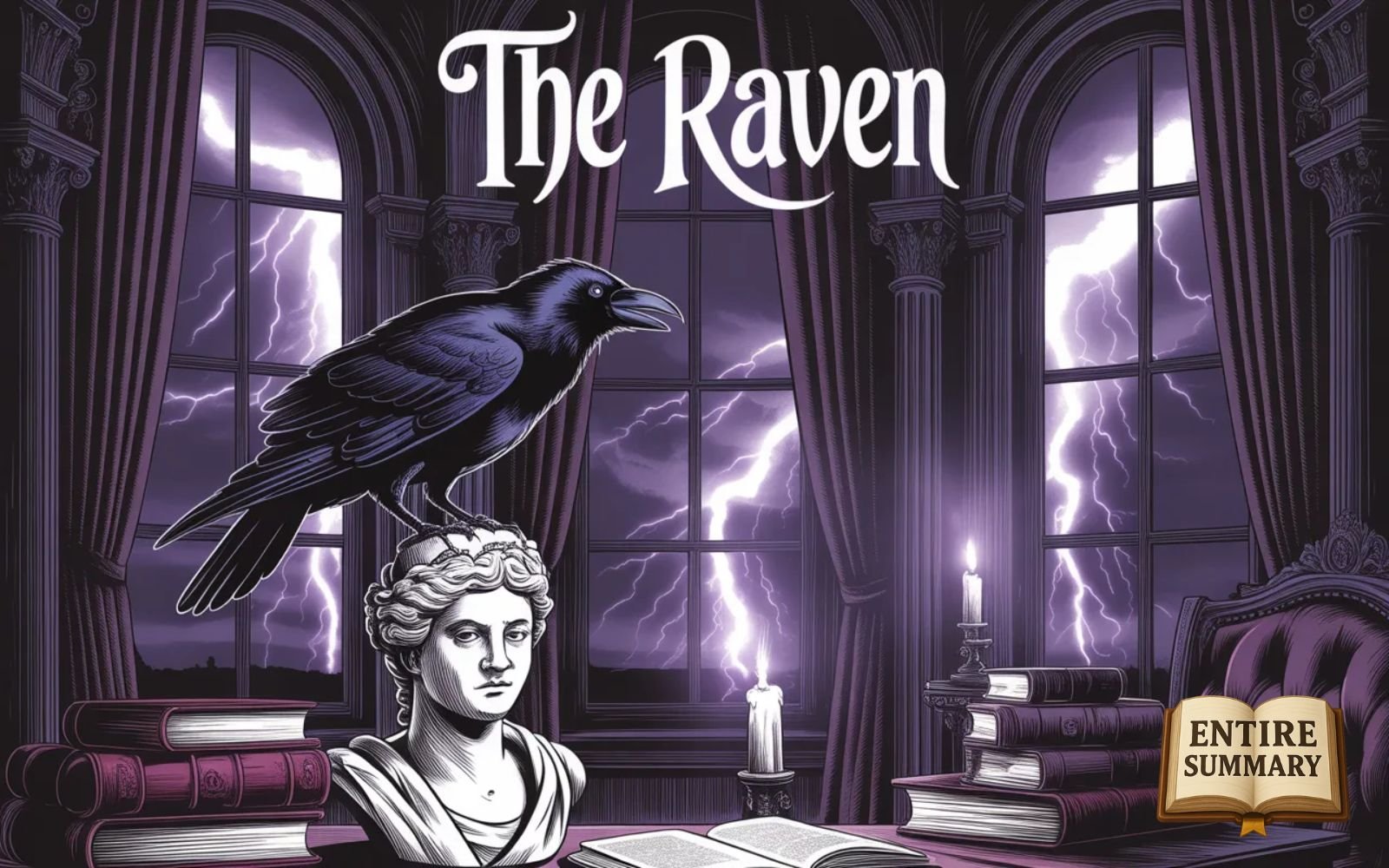
Edgar Allan Poe’s The Raven is one of the most famous works in classic American literature, a narrative poem that blends Gothic poetry with a haunting exploration of grief and loss. The poem tells the story of a man who is visited by a mysterious raven in the middle of the night, forcing him to confront his inner turmoil and psychological torment in Poe. Its enduring popularity lies in the way it captures emotional intensity while exploring the universal themes of death and mortality in literature.
The poem’s opening draws readers into a chamber setting of The Raven where silence is broken by an eerie tapping. This dark atmosphere and sense of isolation in literature set the stage for a profound examination of grief and mourning. Through vivid haunting imagery, Poe shows how loss can lead to an obsessive contemplation of the past, pushing the speaker in The Raven toward a descent into madness. Readers are immediately hooked, drawn into a world where the line between reality and imagination blurs under the weight of sorrow.
About Edgar Allan Poe
The life of Edgar Allan Poe profoundly shaped his literary creations. His Edgar Allan Poe biography reflects a life filled with personal tragedy, financial hardship, and intense loneliness. These experiences inspired his deep fascination with madness in literature, psychological exploration, and the supernatural. Poe became a master of Romantic era poetry, combining meticulous literary craftsmanship with intense emotional depth. His work continues to influence writers and poets across the world, cementing his place in classic American literature.
Poe’s expertise in narrative poem structure allowed him to weave intricate stories that explore human fragility. He often used literary devices in poetry, poetic rhythm, and metaphoric interpretation to reflect the inner workings of the mind. His exploration of isolation and loneliness, grief, and obsession with loss is evident in almost every poem he wrote, but The Raven stands out for its universal resonance and timeless appeal. Poe’s combination of technical skill and emotional insight makes this poem an essential study in literary analysis essay examples.
Summary of “The Raven”
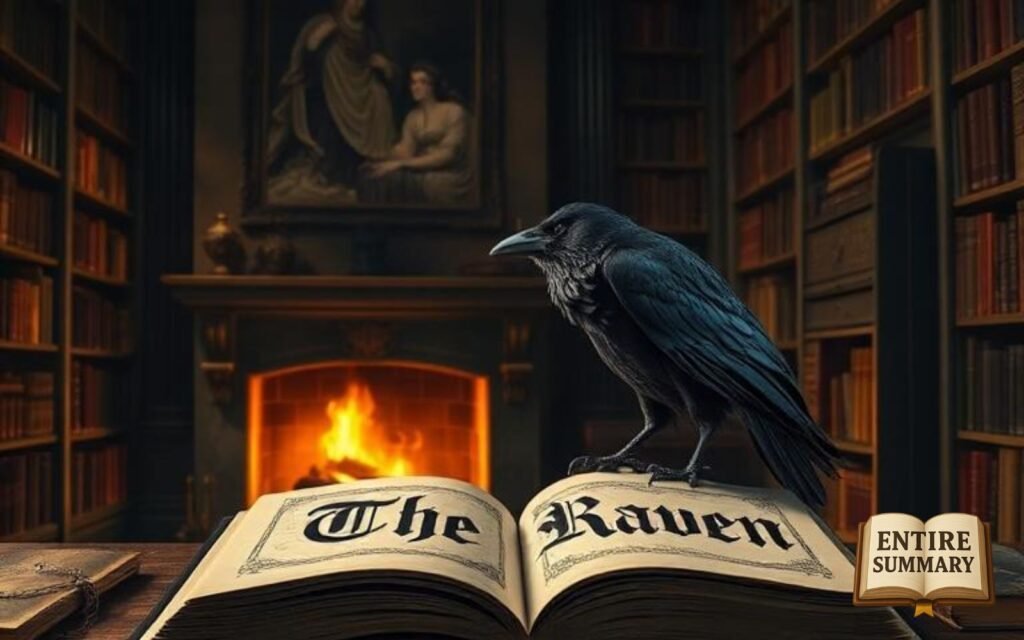
The Raven poem summary begins on a quiet, cold December night. The protagonist, mourning the loss of Lenore character in The Raven, is alone in his study. Shadows fill the room, creating a melancholic tone that mirrors his sorrow. The silence is broken by a soft, mysterious tapping at the door, introducing an element of the supernatural omen. The man initially dismisses the sound but soon discovers that it heralds a visitor who will forever alter his mental state.
As the story unfolds, the arrival of the raven—perched on the Pallas Athena bust symbolism—marks the start of a chilling encounter. The bird speaks only one word, “Nevermore” meaning, which becomes a relentless echo throughout the poem. The speaker tries to reason with the bird, seeking comfort or insight, but is confronted instead with an unyielding reflection of his eternal sorrow. This encounter transforms the chamber setting of The Raven into a psychological landscape of emotional torment, illustrating Poe’s mastery of narrative structure and dark atmosphere.
The Calm Before the Storm
In the opening section, the speaker in The Raven sits alone, contemplating his loss of Lenore character in The Raven. The silence is heavy, and the haunting imagery of the room mirrors the depths of his grief. Shadows stretch across the chamber, creating a sense of foreboding, while the ticking of time emphasizes death and mortality in literature. The quiet tension builds the reader’s anticipation for the supernatural elements in poetry that follow, showing how Poe’s literary craftsmanship manipulates mood.
The moment of stillness also serves as a metaphor for the protagonist’s mind, trapped in psychological torment in Poe. Every sound is amplified, every shadow takes on meaning, and the stage is set for the dramatic entrance of the raven. The narrative poem analysis here highlights how repetition in poetry and internal rhyme contribute to the poem’s hypnotic, suspenseful quality, pulling readers into a descent into madness that feels both inevitable and terrifying.
Enter the Raven: A Visitor With Unwelcome Words
When the raven enters, perched upon the Pallas Athena bust symbolism, it immediately embodies both a supernatural omen and a symbol of grief. Its appearance signals that the speaker in The Raven will face a confrontation with his deepest fears. The word “Nevermore” becomes an instrument of torment, haunting the protagonist with eternal sorrow. Poe’s use of symbolism in The Raven ensures that the bird is more than just a creature—it is a reflection of the speaker’s despair.
The arrival of the raven escalates the dark atmosphere, and the narrative poem structure begins to mirror the speaker’s descent into madness. Every question asked to the bird is met with the same unyielding reply, creating a hypnotic repetition that reinforces themes of grief and loss. This interaction demonstrates Poe’s command of literary devices in poetry, as the alliteration, internal rhyme, and poetic rhythm intensify the psychological exploration of the speaker’s mind.
A Word That Won’t Let Go
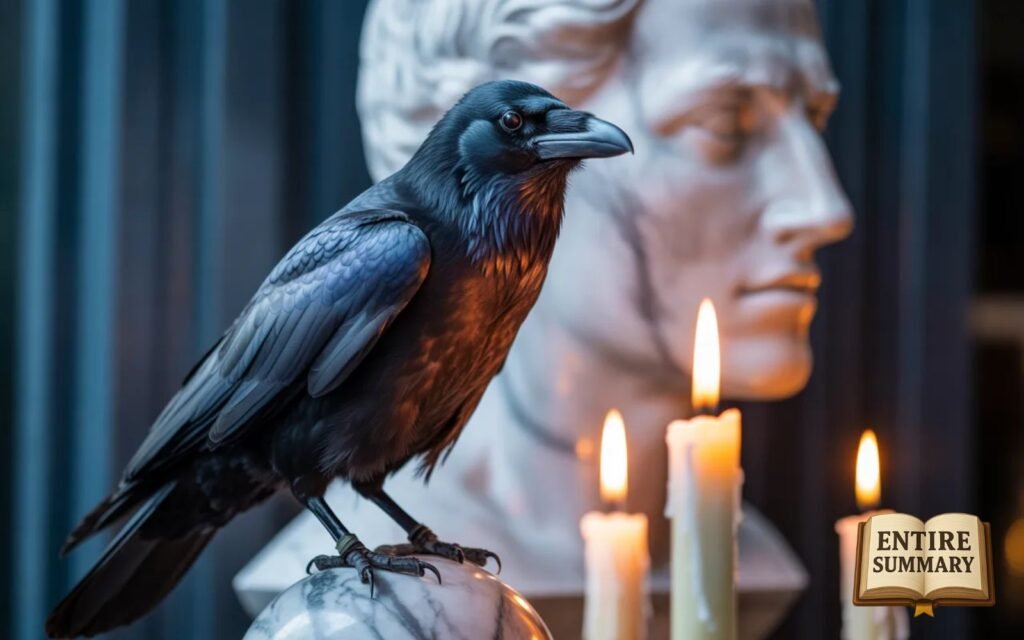
The raven’s repeated utterance of “Nevermore” transforms a simple bird into a relentless symbol of despair. Each repetition heightens the emotional intensity, illustrating the protagonist’s increasing obsession with loss and the inescapable nature of grief and mourning. This technique exemplifies repetition in poetry and contributes to a melancholic tone that pervades the poem.
The speaker initially searches for meaning behind the word, wondering if it carries prophecy, warning, or insight. Yet the bird’s unwavering response mirrors the psychological torment in Poe, reinforcing the idea that death as metaphor cannot be avoided. The room itself becomes a stage for the speaker in The Raven’s mental unraveling, where isolation in literature and the dark atmosphere converge to immerse readers in the intensity of his despair.
The Abyss Opens: Descent into Madness
As the poem progresses, the protagonist spirals into complete descent into madness. The raven’s presence transforms from a mere visitor into an omnipresent symbol of unrelenting sorrow, emphasizing emotional torment and the supernatural elements in poetry that blur reality and imagination. Poe’s meticulous literary craftsmanship ensures that the reader experiences the speaker’s psychological unraveling with vivid clarity.
The chamber becomes a reflection of the speaker in The Raven’s psyche, where isolation and loneliness intensify the perception of eternal sorrow. The repetition of iconic quotes and “Nevermore” meaning exemplifies how narrative structure and literary symbolism are intertwined, making each stanza a deeper exploration of grief, madness, and the themes of grief and loss that define the poem.
A Heart Shattered: Final Despair and the Raven’s Eternal Curse
By the conclusion, the protagonist is trapped in a state of unending despair. The raven remains perched on the Pallas Athena bust symbolism, a permanent reminder of his grief. The poem ends without resolution, leaving the speaker—and the reader—in a cycle of psychological torment in Poe. The combination of symbolism in The Raven, repetition in poetry, and dark atmosphere cements the work’s status as a hallmark of Romantic era poetry.
The final stanzas highlight the emotional intensity and haunting imagery that Poe meticulously crafts. The speaker in The Raven cannot escape his obsession with loss, and the poem’s melancholic tone underscores the permanence of sorrow. Through this unflinching depiction of grief and mourning, Poe offers a timeless reflection on the human condition, mortality, and the power of the mind to shape reality.
Characters in “The Raven”
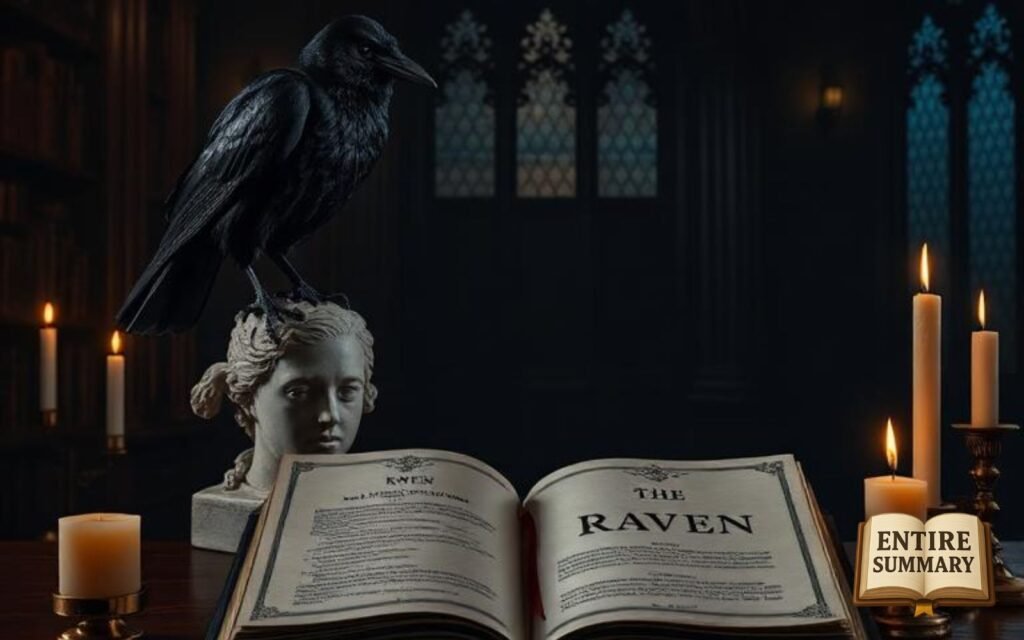
The central figure, the speaker in The Raven, embodies profound psychological exploration. He is consumed by grief and mourning over Lenore character in The Raven and becomes increasingly obsessed with the raven’s unchanging reply. His internal struggle reflects emotional torment, descent into madness, and the human susceptibility to sorrow and isolation.
The raven itself functions as a supernatural omen and a living symbol of the speaker’s pain. Though it speaks only “Nevermore” meaning, its presence reinforces literary symbolism and drives the narrative poem structure. Together, the protagonist and the raven create a dynamic that explores themes of grief and loss, isolation in literature, and the haunting permanence of sorrow.
Themes in “The Raven”
Grief, loss, and madness in literature are the core themes of grief and loss in The Raven. The poem explores how obsession with loss can trap the human mind, turning reflection into torment. The speaker in The Raven’s interaction with the bird illustrates psychological torment in Poe, demonstrating the consequences of unchecked sorrow and the inescapable nature of death and mortality in literature.
Isolation and loneliness amplify the emotional intensity, making the chamber itself a reflection of the mind. Supernatural elements in poetry, such as the talking raven and ominous setting, symbolize grief made manifest. Poe’s use of metaphors in The Raven and literary symbolism deepens the exploration of loss, while the melancholic tone underscores the enduring impact of despair and eternal sorrow.
Literary Devices in “The Raven”
Poe’s mastery of literary devices in poetry elevates the work’s emotional power. The rhyme scheme ABCBBB, trochaic octameter, and internal rhyme create a poetic rhythm that mirrors the speaker’s mental instability. The repetition of iconic quotes and “Nevermore” meaning emphasizes emotional torment and reinforces themes of grief and loss.
Alliteration, vivid haunting imagery, and metaphoric interpretation enhance the dark atmosphere and melancholic tone. Each literary choice contributes to narrative structure, guiding readers through the descent into madness and psychological exploration of the protagonist. Poe’s literary craftsmanship ensures that every line resonates with tension, sorrow, and the hypnotic pull of Gothic narrative.
The Setting of “The Raven”
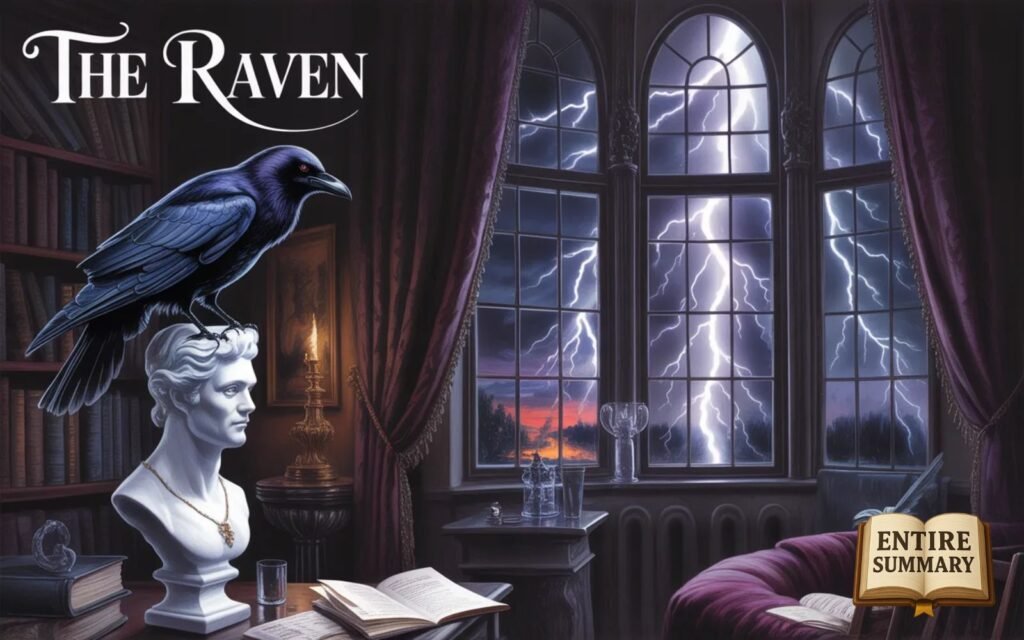
The chamber setting of The Raven plays a crucial role in amplifying the poem’s dark atmosphere and melancholic tone. Poe meticulously describes a lonely, dimly lit room, filled with shadows and fading embers. This confined space mirrors the speaker in The Raven’s isolation in literature, emphasizing how grief can become a prison. The cold December night and the midnight hour intensify the sense of death and mortality in literature, while the quiet of the chamber heightens suspense, preparing readers for the supernatural elements in poetry that follow.
By situating the story in such an intimate yet oppressive environment, Poe transforms the chamber into a psychological landscape. Every flickering shadow or creaking sound becomes symbolic of psychological torment in Poe. The room’s ornate details, from the Pallas Athena bust symbolism to the decaying furniture, reinforce the themes of grief and loss, while also reflecting the speaker’s unraveling mind. The setting, therefore, is not merely a backdrop—it actively participates in the narrative, shaping the mood and guiding the narrative poem analysis.
Analysis of Poe’s Style
Poe’s style in The Raven exemplifies his mastery of literary craftsmanship. He combines Romantic era poetry techniques with Gothic poetry elements to create a unique voice marked by poetic rhythm, repetition, and internal rhyme. His use of trochaic octameter ensures a musical cadence, which mimics the protagonist’s obsessive thoughts and enhances the emotional intensity. Every line is carefully structured to convey both meaning and atmosphere, showcasing Poe’s skill in narrative structure.
In addition, Poe’s attention to metaphors in The Raven and literary symbolism allows readers to explore multiple layers of interpretation. The melancholic tone, coupled with haunting imagery, invites readers to experience the descent into madness firsthand. Poe also integrates alliteration and careful repetition in poetry to heighten suspense, reinforcing the themes of grief and loss and immersing the audience in the psychological exploration of the speaker in The Raven.
Symbolism and Interpretation
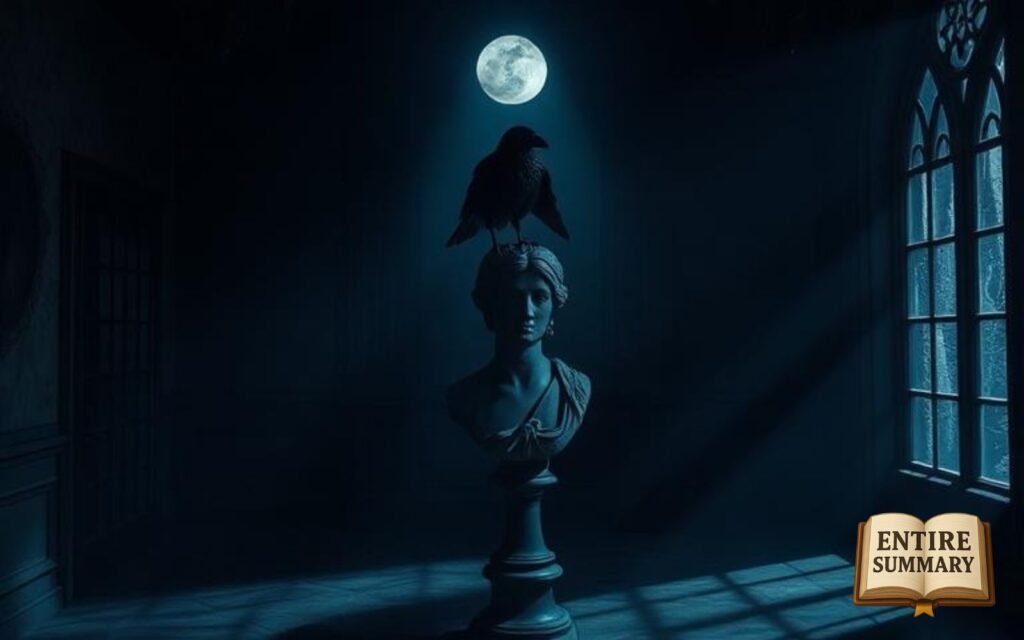
Symbolism is at the heart of The Raven, with each element serving a deeper meaning. The raven itself acts as a supernatural omen, a manifestation of eternal sorrow and the speaker’s obsession with loss. Its repeated word, “Nevermore” meaning, represents the finality of death and the impossibility of escaping grief. Similarly, the Pallas Athena bust symbolism underscores the tension between reason and emotion, showing how the speaker’s intellect is overshadowed by despair.
| Symbol | Meaning | Significance in the Poem |
|---|---|---|
| Raven | Supernatural omen, eternal sorrow | Represents the speaker’s obsession with loss and psychological torment in Poe. |
| Pallas Athena Bust | Wisdom and reason | Contrasts the speaker’s descent into madness, highlighting how grief overwhelms rationality. |
| Midnight/December Night | Darkness and death, time of reflection | Enhances the dark atmosphere, showing the weight of grief and isolation. |
| “Nevermore” | Finality of death, hopelessness | Emphasizes themes of grief and loss and the inescapability of sorrow. |
Time, darkness, and the chamber setting further enhance themes of grief and loss, while the supernatural elements in poetry convey the psychological torment in Poe. Death functions as metaphor, a reminder that mortality is inevitable and sorrow is unending. Through metaphoric interpretation and literary symbolism, Poe creates a multilayered narrative where each image, sound, and phrase contributes to the emotional intensity and haunting imagery that define the poem.
Important Quotes from “The Raven”
The power of quotes from The Raven lies in their ability to capture universal sorrow. Iconic lines such as “Once upon a midnight dreary, while I pondered, weak and weary” establish the melancholic tone and dark atmosphere. The repeated “Nevermore” meaning reinforces the speaker’s obsession with loss and serves as a chilling supernatural omen.
Other notable iconic quotes include:
| Quote | Literary Device | Emotional Effect |
|---|---|---|
| “Once upon a midnight dreary, while I pondered, weak and weary” | Alliteration, trochaic octameter | Establishes melancholic tone and dark atmosphere. |
| “Take thy beak from out my heart, and take thy form from off my door!” | Metaphor, repetition in poetry | Shows emotional torment and the descent into madness. |
| “And the Raven, never flitting, still is sitting, still is sitting, on the pallid bust of Pallas just above my chamber door” | Symbolism, repetition, internal rhyme | Reinforces psychological exploration and the obsession with loss. |
| “Tell me what thy lordly name is on the Night’s Plutonian shore!” | Gothic imagery, supernatural elements in poetry | Highlights themes of grief and loss and the eternal sorrow of the protagonist. |
Key Takeaways from “The Raven”
The Raven serves as a masterclass in literary craftsmanship, psychological exploration, and narrative poem analysis. The poem highlights how grief and mourning can overwhelm the mind, transforming sorrow into emotional torment. The descent into madness is mirrored by the narrative structure, repetitive poetic rhythm, and the hypnotic use of trochaic octameter.
Readers also gain insight into themes of grief and loss, isolation in literature, and the inevitability of death and mortality in literature. The poem’s supernatural elements in poetry, symbolism in The Raven, and melancholic tone reinforce the profound psychological impact of unprocessed grief. For anyone studying Romantic era poetry, classic American literature, or literary analysis essay examples, the poem provides endless material for exploration and reflection.
FAQs
What is the main idea of The Raven? The poem explores grief and mourning, obsession with loss, and the psychological effects of losing a loved one, represented through the speaker in The Raven and his interaction with the supernatural omen.
Who is Lenore in The Raven? Lenore is the deceased beloved of the protagonist, whose loss drives the descent into madness and highlights themes of grief and loss.
Why is the raven symbolic? The raven embodies eternal sorrow, death as metaphor, and serves as a supernatural omen, emphasizing the permanence of loss and the inevitability of psychological torment in Poe.
What is the significance of the word “Nevermore”? The repeated “Nevermore” meaning reinforces hopelessness, mirrors the obsession with loss, and intensifies the emotional intensity of the poem.
Conclusion
Edgar Allan Poe’s The Raven stands as a pinnacle of classic American literature and Romantic era poetry, merging Gothic poetry with profound psychological insight. Its melancholic tone, haunting imagery, and intricate literary craftsmanship create a timeless exploration of grief and mourning, psychological torment in Poe, and the universal inevitability of death and mortality in literature.
Through the speaker in The Raven, the protagonist, and the supernatural elements in poetry, readers experience the enduring power of sorrow and the descent into madness that can accompany profound loss. Every aspect of the poem—from trochaic octameter to symbolism in The Raven and iconic quotes—serves to immerse the reader in the emotional intensity, dark atmosphere, and themes of grief and loss that have made this work a lasting masterpiece.