
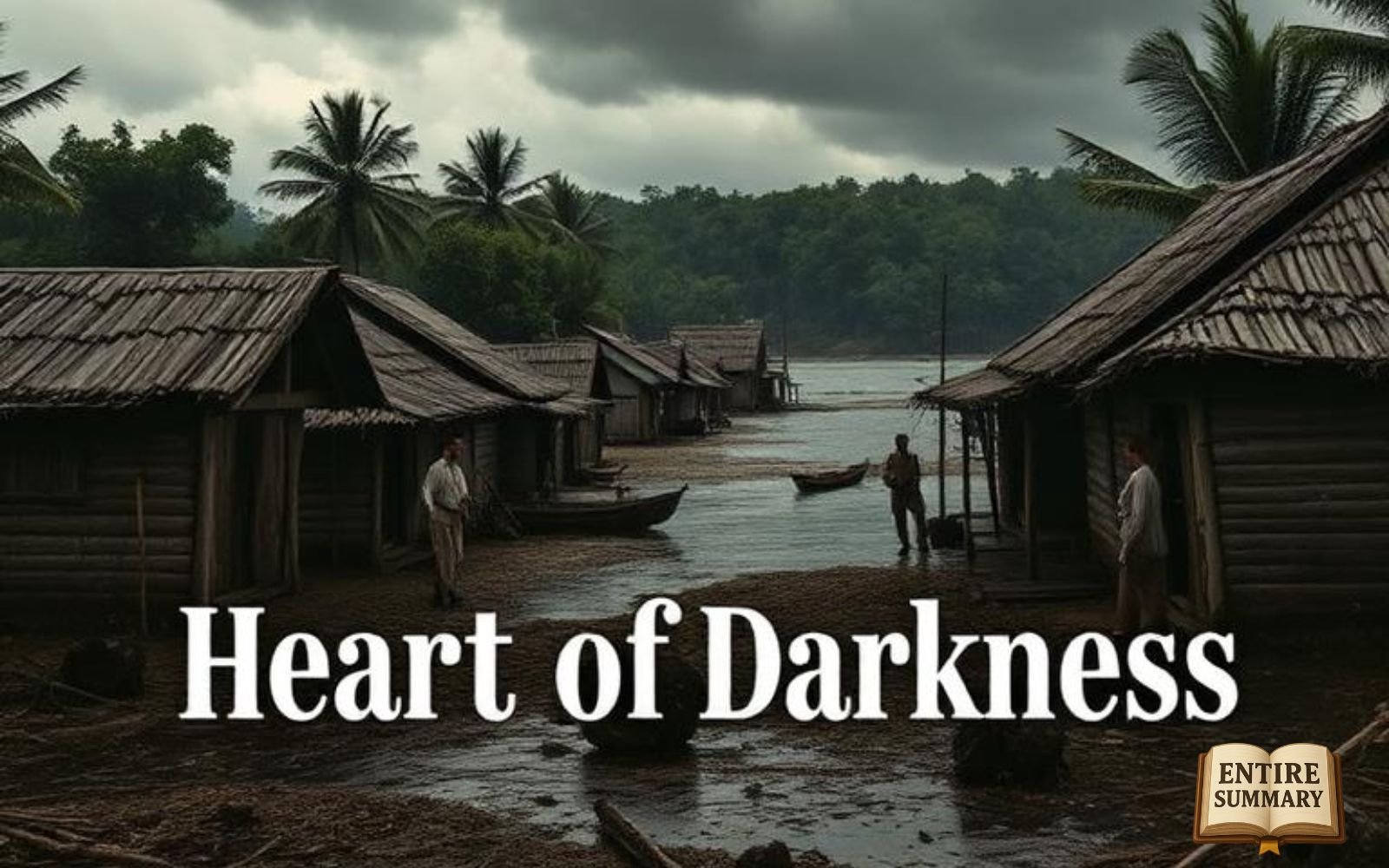
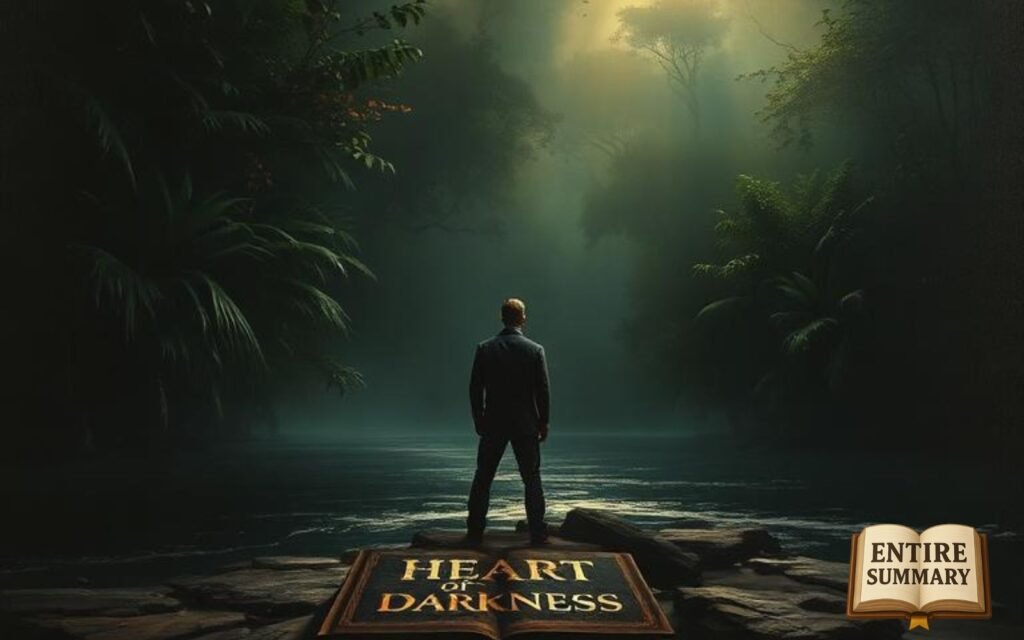
Heart of Darkness by Joseph Conrad is more than just a story about a river journey; it is an exploration of human nature, moral decay / corruption, and the dark side of European colonialism. Set against the backdrop of the Congo River, the novella blends adventure vs psychological fiction, presenting a harrowing tale of madness and isolation as Charles Marlow navigates both the African jungle / African wilderness and the darker corridors of the human soul. Its relevance endures because it challenges readers to confront civilization vs savagery and the hypocrisy of the “civilizing mission”.
Through the voyage upriver, Joseph Conrad crafts a narrative that examines the complexities of colonial exploitation while presenting psychological horror in the form of the enigmatic Kurtz, a man who embodies both brilliance and moral collapse. The novella also serves as a literary critique of colonialism, weaving frame narrative / storytelling, symbolism in literature, and stream-of-consciousness techniques into a tightly layered text. Its influence spans modernist literature and continues to inspire discussions on imperialism in Africa and moral ambiguity in human conduct.
Quick Overview of Heart of Darkness
Heart of Darkness summary centers on Charles Marlow, a sailor who embarks on a mission to retrieve the elusive Kurtz, an ivory agent deep within the Congo Free State. The novella exposes the brutality of European imperialism and the exploitation of the African jungle / African wilderness. It also examines madness and isolation, showing how greed and unchecked ambition distort morality.
The story is structured as a frame narrative / storytelling, beginning on the Thames River in England, where Marlow recounts his journey to other sailors. The contrast between Europe’s supposed civilization vs savagery in Africa underscores moral decay / corruption. The novella uses psychological fiction techniques to explore the darkness within the human soul, making it both a gripping adventure and a profound literary analysis of the human condition.
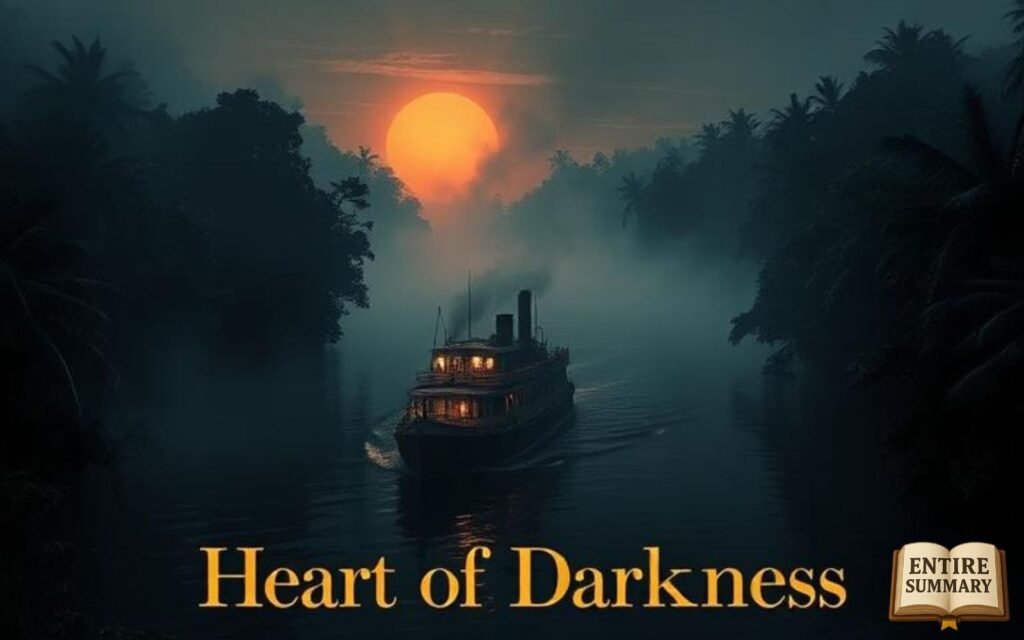
Plot Summary – Journey into the Congo
The journey upriver along the Congo River represents both a physical expedition and a psychological descent into darkness. Charles Marlow encounters decaying colonial stations, unhinged ivory agents, and evidence of colonial exploitation, which highlights the hypocrisy of the “civilizing mission”. Along the way, Marlow observes moral decay / corruption in the The Manager / Company agents, foreshadowing his encounter with Kurtz.
Marlow’s voyage becomes a study of human nature, madness and isolation, and the thin veneer separating civilization vs savagery. The Congo River itself is a symbol of the journey into the African jungle / African wilderness, representing both danger and discovery. Heart of Darkness analysis often emphasizes that the novella is not only about imperialism but also the existential dread and psychological horror that comes from confronting the darkness within the human soul.
Chapter-by-Chapter Breakdown
Part 1 – Marlow’s Journey Begins
In the opening, Charles Marlow recounts how he secured a job with the European trading company operating along the Congo River. Early encounters with Aunt, who helped him obtain the post, and bureaucratic figures like The Accountant, illustrate the moral ambiguity of European colonial structures. Marlow begins to notice the hypocrisy of the “civilizing mission”, as greed and inefficiency dominate.
This part introduces the frame narrative / storytelling style, contrasting Europe with the African jungle / African wilderness. Marlow’s reflections highlight civilization vs savagery, setting the tone for his later encounters with the Jungle (wilderness, danger, untamed nature) and the eventual confrontation with Kurtz, a man whose ideals have been destroyed by unchecked power and isolation.
Part 2 – Deep into the Congo & Encounters
As Charles Marlow ventures deeper, the journey becomes more perilous. Encounters with The Brickmaker, Helmsman, and remote colonial stations reveal the brutal exploitation inherent in the European colonial system. The Congo River narrows, the fog (confusion / moral ambiguity) thickens, and the psychological pressure mounts, symbolizing Marlow’s growing awareness of darkness within the human soul.
Marlow observes the severed heads (symbol of moral collapse) and the lawlessness of the Outer Station and Central Station, reflecting moral decay / corruption among the ivory (greed, power) seekers. Heart of Darkness analysis suggests that these encounters amplify the tension between savagery / civilization and foreshadow the final revelation of Kurtz as a symbolic figure of madness and isolation.
Part 3 – Meeting Kurtz & The Climax
Marlow finally reaches Kurtz at the Inner Station, a man revered yet feared for his intellect and cruelty. Kurtz embodies the extremes of European colonialism, psychological horror, and the allure of ivory trade / ivory agent. His empire of moral chaos, supported by the African Mistress, contrasts sharply with the civilized pretense of Europe, showing civilization vs savagery.
Kurtz’s death and final words, “The horror! The horror!”, crystallize the novella’s exploration of human nature, moral decay / corruption, and the seductive power of madness and isolation. The frame narrative / storytelling returns as Marlow sails back to Europe, reflecting on the existential dread and ethical dilemmas exposed during his journey, leaving readers with questions about civilization, ethics, and the hypocrisy of the “civilizing mission”.
Main Characters & Analysis
Charles Marlow (narrator/protagonist) serves as the moral compass, observing the European colonial system while navigating personal and psychological challenges. Kurtz (antagonist, symbolic figure) represents unchecked ambition, moral decay / corruption, and the seductive allure of power in isolation. The African Mistress (Kurtz’s lover, symbol of wilderness) embodies the untamed African jungle / African wilderness, highlighting the collision of European imperialism and natural world.
Other pivotal figures include The Manager (Central Station agent), whose bureaucratic apathy contrasts sharply with Kurtz’s intensity, and Kurtz’s Intended (fiancée), representing idealized European notions of morality and order. Supporting characters such as The Russian Harlequin (Kurtz’s follower), Aunt, The Accountant, and The Brickmaker enrich the narrative, showing different facets of colonial exploitation, madness and isolation, and moral ambiguity.
Themes Explored in Heart of Darkness
Heart of Darkness analysis reveals several intertwined themes, most prominently civilization vs savagery. Joseph Conrad shows that the line between order and chaos is fragile, as European traders claim to bring “civilization” while exploiting and murdering in the African jungle / African wilderness. The novella critiques European imperialism and highlights the hypocrisy of the “civilizing mission”, showing how colonial exploitation fosters moral decay / corruption.

Another central theme is madness and isolation, embodied in Kurtz (antagonist, symbolic figure). Cut off from Europe and surrounded by unchecked power, Kurtz descends into cruelty and obsession, illustrating darkness within the human soul. Themes of existential dread, ethical dilemma, and moral ambiguity permeate the story, making it both a psychological fiction and a pointed literary critique of colonialism that resonates with modern readers interested in the human psyche and imperialist history.
Symbolism & Literary Devices
Heart of Darkness is rich in symbolism in literature. The Congo River (primary setting) is more than a physical route; it represents the psychological descent of Charles Marlow (narrator/protagonist) into the darkness within the human soul. The fog (confusion / moral ambiguity) and severed heads (symbol of moral collapse) illustrate moral decay / corruption and the collapse of European pretensions of morality.
Light and darkness (symbolism) dominate the novella, representing knowledge versus ignorance and civilization vs savagery. Stream-of-consciousness and unreliable narrator techniques allow readers to experience Marlow’s moral dilemmas firsthand. Devices like foreshadowing, gothic elements, and frame narrative / storytelling strengthen the tension, while recurring motifs such as ivory (greed, power) and jungle (wilderness, danger, untamed nature) deepen the critique of European colonial system and reveal psychological horror.
Setting & Context
The story unfolds primarily along the Congo River (primary setting) in the Congo Free State (colonial Africa), an area notorious for brutal exploitation during the late 19th century. Heart of Darkness summary uses this African jungle / African wilderness as both a literal and metaphorical space, symbolizing the chaos and moral ambiguity of imperialism. The dense forest, unpredictable river, and isolated trading posts underscore the dangers of the environment and the psychological strain on explorers.
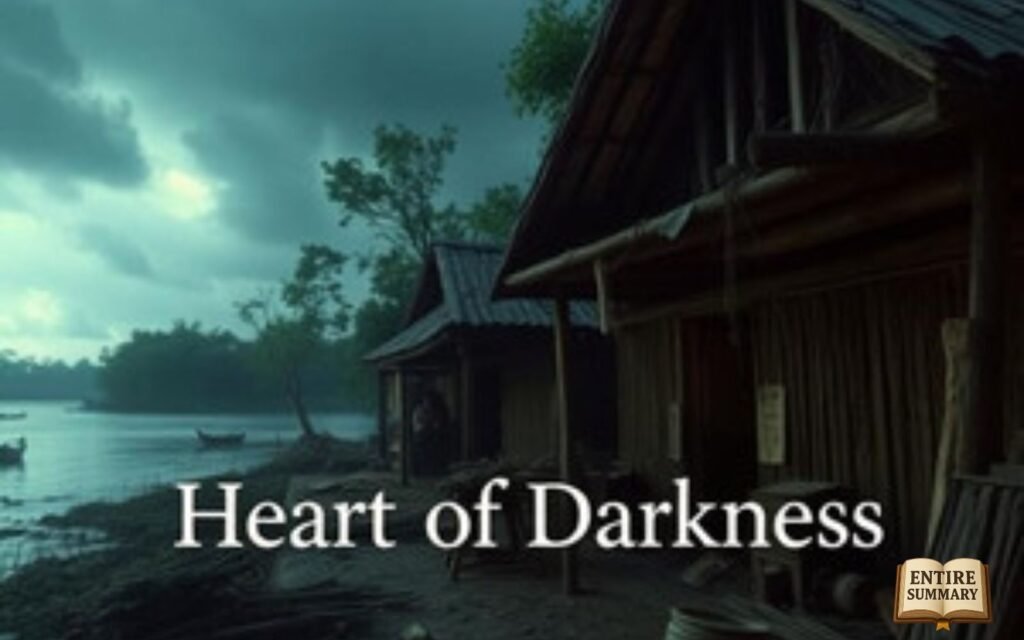
European cities like Brussels, Belgium (implied European city) and the Thames River (frame narrative, England) provide contrast, representing a society that claims moral superiority while funding colonial exploitation abroad. The juxtaposition of Europe and Africa emphasizes the hypocrisy of European imperialism, revealing how civilization vs savagery is often a matter of perception rather than reality.
Writing Style & Pacing
Joseph Conrad (author) employs a frame narrative / storytelling structure, starting and ending in England while narrating Charles Marlow’s (narrator/protagonist) journey upriver. The style is complex, yet it captures the tension between adventure vs psychological fiction, blending action with deep literary analysis.
Modernist literature elements appear in the stream-of-consciousness passages and the unreliable narrator, allowing readers to experience Marlow’s thoughts in real time. Pacing varies intentionally: the early journey is slow, building suspense through detailed descriptions of the Congo River (primary setting) and African jungle / African wilderness, while encounters with Kurtz (antagonist, symbolic figure) accelerate the narrative, culminating in an intense psychological climax.
Literary Significance & Genre
Heart of Darkness is a landmark of 19th century literature, bridging Victorian literature and modernist literature. Its exploration of colonialism / imperialism, human nature, and psychological horror has influenced countless works, from Apocalypse Now (film adaptation) to The Secret Sharer (Conrad’s thematic parallel). The novella merges adventure vs psychological fiction, creating a hybrid genre that examines both external expeditions and internal moral landscapes.
The work is often studied for its literary critique of colonialism, symbolic exploration of madness and isolation, and layered narrative style. Its complex interplay of moral ambiguity, existential dread, and darkness within the human soul makes it a timeless text for those seeking both thrilling storytelling and deep philosophical reflection.
Critical Reception & Reader Reviews
Upon publication, Heart of Darkness received both praise and criticism. Some contemporaries admired its bold critique of European imperialism, while others were uncomfortable with its stark portrayal of colonial exploitation and moral decay / corruption. Over time, it has become a staple of literary analysis in universities and literary circles.
Modern readers often note the novella’s psychological fiction elements and the unsettling depiction of madness and isolation. Works like Things Fall Apart (Achebe’s critique) challenge Conrad’s portrayal of Africa, while scholars continue to debate the balance of adventure vs psychological fiction, symbolism, and the ethics of the European colonial system.
Top Quotes from Heart of Darkness
Some of the most powerful lines capture the novella’s themes:
“The horror! The horror!” – Kurtz epitomizes moral decay / corruption, madness and isolation, and the darkness within the human soul.
“There is a touch of death in the heart of every man.” – Marlow reflects the psychological horror and existential dread throughout the Congo River journey.
“We live as we dream—alone.” – Conrad highlights the tension between civilization vs savagery and the isolation of Kurtz (antagonist, symbolic figure).
These quotes remain central in discussions of European colonialism, moral ambiguity, and the psychological fiction elements of modernist literature.
Commonly Asked Questions (FAQ)
Readers often have questions about Heart of Darkness summary and its complex themes. One common question is: Who is Kurtz (antagonist, symbolic figure)? He is a once-idealistic ivory agent who succumbs to madness and isolation, embodying the darkness within the human soul. Another frequent query asks about Charles Marlow (narrator/protagonist). He is both a traveler and observer, whose journey on the Congo River (primary setting) doubles as a moral and psychological exploration.
Questions about the novella’s message are also common. Many ask how Heart of Darkness analysis critiques European colonialism. The story portrays the hypocrisy of the “civilizing mission”, colonial exploitation, and the moral decay / corruption inherent in imperialist endeavors. Readers also wonder about Kurtz’s Intended (fiancée) and The African Mistress (Kurtz’s lover, symbol of wilderness). These characters contrast European ideals with the untamed African jungle / African wilderness, emphasizing the clash of civilization vs savagery.
Table – Key FAQ Highlights
| Question | Answer |
|---|---|
| Who is Kurtz? | A charismatic ivory agent who descends into madness and isolation, symbolizing moral decay / corruption. |
| Who is Charles Marlow? | The narrator-protagonist who journeys into the Congo River, witnessing both physical and moral darkness. |
| What is the central message? | Critique of European colonialism and exploration of civilization vs savagery. |
| Who are Kurtz’s Intended and African Mistress? | Represent European ideals and untamed wilderness, highlighting contrasts in moral and cultural values. |
| Why is the Congo River important? | Symbolizes both physical and psychological descent, acting as a mirror to darkness within the human soul. |
About Joseph Conrad – The Mastermind
Joseph Conrad (author) was a Polish-British writer whose experiences as a sailor deeply influenced Heart of Darkness. His travels along the Congo exposed him to colonial exploitation firsthand, shaping his literary critique of colonialism and the novella’s vivid depiction of psychological horror. Conrad’s innovative use of frame narrative / storytelling and stream-of-consciousness set the stage for modernist literature and influenced generations of writers.
Conrad explored themes like madness and isolation, moral decay / corruption, and civilization vs savagery across his works, including The Secret Sharer (Conrad’s thematic parallel). His narratives often feature morally complex characters, like Charles Marlow (narrator/protagonist) and Kurtz (antagonist, symbolic figure), whose experiences question human nature, existential dread, and the ethics of European imperialism. Through his detailed portrayals of the African jungle / African wilderness, Conrad created stories that remain both thrilling adventures and profound literary analysis of humanity.
Conclusion – The Horror and the Truth
Heart of Darkness by Joseph Conrad (author) is more than a story of a river journey; it is a timeless exploration of human nature, psychological horror, and the ethical failings of European colonialism. The Congo River (primary setting) journey exposes the fragility of civilization vs savagery, showing how madness and isolation and the pursuit of ivory (greed, power) can destroy both individuals and societies.
Through characters like Charles Marlow (narrator/protagonist), Kurtz (antagonist, symbolic figure), The Manager (Central Station agent), Kurtz’s Intended (fiancée), and The African Mistress (Kurtz’s lover, symbol of wilderness), the novella explores moral ambiguity, ethical dilemma, and darkness within the human soul. Its enduring impact lies in its profound literary critique of colonialism, intricate symbolism in literature, and seamless blending of adventure vs psychological fiction. The haunting words “The horror! The horror!” continue to resonate, reminding readers that the journey into darkness often reflects the shadows of human conscience itself.
Key Takeaways from Heart of Darkness
| Aspect | Insight |
|---|---|
| Main Characters | Charles Marlow, Kurtz, The Manager, Kurtz’s Intended, The African Mistress |
| Central Themes | Civilization vs savagery, madness and isolation, moral decay / corruption, colonial critique |
| Symbolism | Congo River, ivory, fog, severed heads, light and darkness |
| Literary Style | Frame narrative, stream-of-consciousness, psychological fiction, modernist literature |
| Critical Message | Condemns European colonialism / imperialism, questions human nature, explores psychological and ethical dilemmas |
Heart of Darkness summary remains an essential read for understanding the human psyche, the horrors of unchecked power, and the moral costs of imperialism in Africa. Its timeless relevance ensures that readers continue to navigate the murky waters of darkness within the human soul and the shadows of history.