
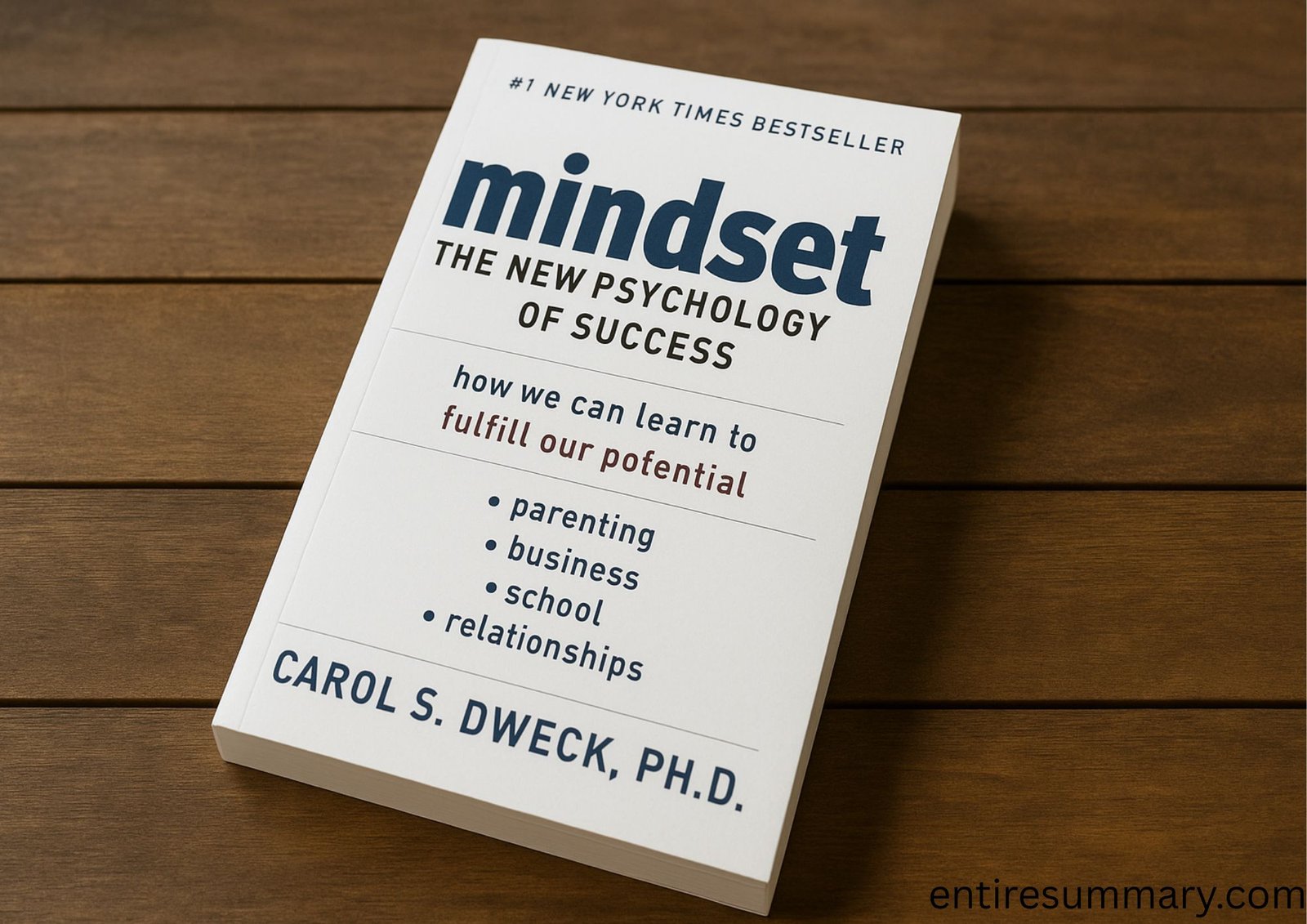
Mindset The New Psychology of Success always been fascinated by why some people seem to thrive in life, bouncing back from setbacks with more resilience, while others get stuck in a cycle of frustration. This curiosity led me to one of the most influential books I’ve ever read, ‘Mindset The New Psychology of Success: The New Psychology of Success’ by Carol S. Dweck. This isn’t just another self-help book; it’s a groundbreaking work of social psychology that fundamentally changes how you view potential, learning, and failure.”
The Two Mindsets: Fixed vs. Growth
I am a language model and can help you rephrase the sentence. Please tell me which sentence you want me to rephrase. Dweck’s research, spanning decades, shows that our beliefs about our own abilities and intelligence play a massive role in our success and happiness.
Also read: /atomic-habits/
You have asked me to rewrite a sentence. Please tell me the sentence you want me to rephrase. You are either skilled at something or you’re not. This view leads to a constant need to prove yourself. If you have a fixed mindset, you might avoid challenges because you fear they will expose your limitations. Mistakes are seen as a personal failure, and effort is viewed as a sign that you lack natural talent. Instead of learning from criticism, a person with a fixed mindset often feels attacked and reacts defensively. They might feel jealous of others’ success because it highlights their own perceived shortcomings. This mindset creates a fragile sense of self-worth that is constantly at risk.
In contrast, a person with a growth mindset believes their abilities and intelligence can be developed through dedication and hard work. They believe that talent is merely the beginning. They view challenges as chances to develop and improve. Mistakes are not a source of shame but valuable information that helps them improve. They embrace effort, understanding that it’s the path to mastery. When they see others succeed, they feel inspired, not threatened, and look for lessons they can apply to their own lives. A growth mindset encourages a passion for learning and helps people become more resilient. It’s a fundamental shift from “I am what I am” to “I can become better.”
Dweck illustrates these concepts with a fascinating array of examples from different fields. We see how a fixed mindset can derail promising young athletes, while a growth mindset can help others reach the pinnacle of their sport. We learn about the subtle ways parents and teachers can praise children that either reinforces a fixed mindset (“You’re so smart!”) or encourages a growth one (“I’m so proud of how hard you worked on that!”).
Mindsets in Action: The Real World
The first half of the book lays out the theory, but the second half is where Dweck shows us the real-world implications of these mindsets in action. She takes us on a journey through the lives of famous figures and organizations, demonstrating how a mindset can shape destiny.
Among the most fascinating life stories is that of the famed tennis player, John McEnroe. Dweck argues that McEnroe’s immense talent was held back by a fixed mindset. He was so focused on being “the best” that any loss or perceived imperfection would send him into a rage. This self-sabotaging behavior prevented him from reaching his full potential and enjoying the game. His fixed mindset made him fragile under pressure, contrasting with his rival, Bjorn Borg, who embodied a quieter, more resilient approach to the game.

Another standout example is the story of Jack Welch and his transformative leadership at General Electric. While Welch had many admirable qualities, Dweck points out that his fixed mindset led him to rely on “star” employees and to dismiss those who weren’t immediate high-fliers. This focus on innate talent rather than potential stifled growth within the company and created a culture where people were afraid to fail.
On the other hand, Dweck highlights organizations and individuals who demonstrate a powerful growth mindset. She tells the story of Lou Gerstner, who took over IBM when it was on the brink of collapse. Gerstner didn’t have a background in technology, but he had a growth mindset. He wasn’t afraid to admit what he didn’t know and surrounded himself with smart people. He focused on changing the company’s culture from one of fixed-mindset arrogance to a more humble, learning-oriented one.
The book also delves into relationships, showing how a fixed mindset can lead to jealousy and resentment when a partner succeeds, while a growth mindset encourages partners to grow together, celebrating each other’s achievements and supporting each other through challenges.
Key Takeaways
The journey through “Mindset The New Psychology of Success” leaves you with some powerful, life-altering insights. Here are a few that stand out:
- Mindset is a choice. You might lean more toward one mindset naturally, but it’s not a permanent trait. You can choose to adopt a growth mindset by becoming more aware of your thoughts and reactions to challenges.
- Effort is not a sign of weakness. A key principle of a fixed mindset is the idea that intelligent individuals don’t need to put in much effort. ‘Mindset’ shows us that effort is what makes us smarter and more capable.
- Praise matters, and how you praise matters more. Praising a child’s intelligence (“You’re so smart!”) can lead to a fixed mindset, while praising their effort and process (“I’m impressed by how you tackled that difficult problem!”) fosters a growth mindset.
- Mindset is something that can be applied to all aspects of life. From parenting to business, from relationships to sports, understanding and applying the principles of the growth mindset can lead to profound improvements.
FAQs
What is the biggest difference between a fixed and a growth mindset?
The core difference lies in how a person views their abilities. A fixed mindset sees abilities as static and innate, while a growth mindset sees them as malleable and capable of development through effort and learning.
How can I determine if I have a fixed mindset?
Common signs include avoiding challenges, feeling defensive about criticism, feeling threatened by the success of others, and giving up easily when faced with setbacks.
Does the book offer practical steps for developing a growth mindset?
Yes, Dweck provides a “toolkit” for changing your mindset. She suggests acknowledging and naming your fixed mindset persona, taking on challenges you’ve been avoiding, and consciously reframing setbacks as learning opportunities.
Can an adult change their mindset, or is it too late?
Dweck’s research shows that mindset is not a permanent trait and can be changed at any age. She provides compelling stories of adults who transformed their lives by adopting a growth mindset later in life.
Is one mindset always better than the other?
While the book is a strong advocate for the growth mindset, Dweck doesn’t suggest that a fixed mindset is inherently evil. Rather, she shows how the fixed mindset can be limiting and often counterproductive to personal and professional success and happiness.
Does the book have any critiques?
Some critics argue that while the concept is powerful, it might oversimplify the factors that contribute to success. They suggest that other variables, such as socioeconomic status, opportunities, and luck, also play a significant role.
Is there a follow-up to this book?
While there is no direct sequel, Dweck has continued her work in this field and her research and writings have been widely published. The concepts from ‘Mindset’ have also been expanded upon and applied in various educational and corporate settings around the world.

Final Thoughts
‘Mindset The New Psychology of Success’ is one of those rare books that doesn’t just give you a new idea; it gives you a new lens to view the world. It’s a powerful and practical guide for anyone who wants to reach their full potential, whether in their career, relationships, or personal life. This book is a fantastic read for anyone interested in personal growth and psychology. Its clear, well-researched, and transformative message earns it a perfect score in my opinion. If you found this interesting, you might also like ‘Grit: The Power of Passion and Perseverance’ by Angela Duckworth, which builds on similar themes.