
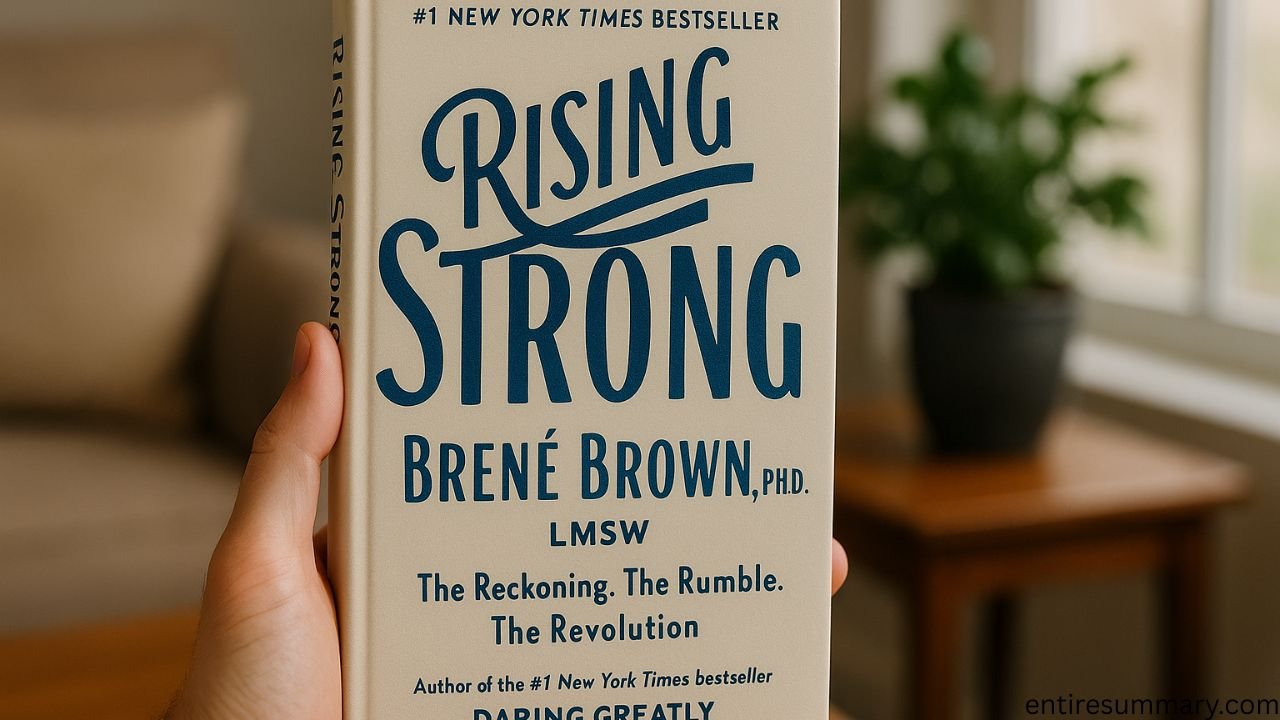
Rising Strong by Brené Brown is a powerful self-help and psychology book about what it takes to recover from setbacks, failures, and heartbreak. Brown explains that the real measure of courage is not avoiding falls but learning how to rise after them. This text offers a simple overview of the main ideas.
First Half Summary: The Reckoning and the Rumble
Brené Brown frames Rising Strong around three main stages: the Reckoning, the Rumble, and the Revolution. The initial half of the book is dedicated to the first two points.
- The Reckoning: This stage is about recognizing emotions instead of pushing them aside. Brown stresses that people often ignore feelings like disappointment, grief, or shame because they are uncomfortable. But avoiding emotions only makes them stronger. The reckoning requires awareness—pausing to notice what we are feeling in the moment.
- Owning our stories: Brown explains that ignoring pain or numbing it with distractions prevents growth. Owning the story, even when it is hard, is the first step toward healing.
- The Rumble: Once we recognize emotions, we must rumble with them. This means examining the stories we tell ourselves when we are hurt. For example, if a friend cancels plans, we might tell ourselves, “I’m not important.” The rumble is about questioning these stories and checking them against reality.
- The stories we make up: Brown highlights how our brains are wired to fill in gaps with assumptions, often negative ones. The challenge is to separate facts from the fearful narratives we invent.
Also read: /algorithms-to-live-by/
By the middle of the book, Brown makes it clear: true strength comes not from pretending we don’t fall but from being brave enough to face the emotions that come with it.

Second Half Summary: The Revolution and Rising Strong
In the second half, Brené Brown focuses on the Revolution—the transformation that happens when we practice reckoning and rumbling consistently.
- The Revolution: This is not a single moment but a way of living. Rising strong means integrating the lessons from our struggles into our daily lives and relationships. It’s about choosing courage over comfort, even when the process is messy.
- Creativity and connection: Brown explains that when we own our stories, we open ourselves up to creativity and stronger relationships. Vulnerability acts as a pathway to building trust and intimacy.
- Failure and innovation: She emphasizes that organizations and leaders who allow space for failure are the ones that foster innovation. Pretending failure doesn’t exist kills creativity.
- The importance of curiosity: Instead of shutting down when we feel hurt, Brown urges us to stay curious. Asking questions like, “Are there other ways to interpret this?” helps challenge the false stories we make up.
- Rising strong means living with integrity by ensuring our actions match our values, even when it’s tough. This is where resilience is built.
- The wholehearted life: The book ends with the reminder that we are all imperfect, but it is in the process of falling and rising that we discover courage, compassion, and connection.
Brown’s final message is hopeful: life’s struggles are not signs of weakness but opportunities for transformation. Rising strong is not about avoiding pain but using it to grow into a fuller, braver version of ourselves.

FAQs
1. What is the main theme of Rising Strong?
The book is about how we recover from failures, setbacks, and emotional struggles. Brown shows that true courage lies in facing emotions and learning from them.
2. Who is the author of the book?
The author is Brené Brown, a research professor and bestselling writer known for her work on vulnerability, shame, and resilience.
3. What are the three stages of rising strong?
The “Rising Strong” method is broken down into three stages: Reckoning, where we identify our feelings; Rumble, where we question the narratives we have about ourselves; and Revolution, where we use these insights to change our lives.
4. What does “owning our stories” mean?
It means acknowledging our experiences, including painful ones, instead of denying or ignoring them. Owning them allows us to heal.
5. How does the book define the “rumble”?
The rumble is the hard process of examining the stories we create in our minds when we feel hurt and replacing them with truth and compassion.
6. Why does Brown emphasize vulnerability in the book?
Because vulnerability is the foundation of courage and resilience. Without it, we can’t truly connect or recover from setbacks.
7. Is this book only about personal struggles?
No. Brown also applies the lessons to leadership, organizations, and creativity, showing that embracing failure fuels innovation.
8. What role does curiosity play in rising strong?
Curiosity helps us challenge false assumptions and uncover healthier perspectives when we feel hurt or rejected.
9. How does Rising Strong connect to Brown’s other books?
It builds on ideas from The Gifts of Imperfection and Daring Greatly, focusing specifically on what happens after we fall and how we rise again.
10. Can this book help with workplace challenges?
Yes. Brown argues that workplaces thrive when leaders encourage openness about failure and create cultures of trust.
11. How does shame appear in the book?
Shame is described as a major barrier to resilience. Overcoming shame by sharing our stories is central to rising strong.
12. Does the book provide practical tools?
Yes. Brown includes real-life examples and reflective practices to help readers apply the reckoning, rumble, and revolution in daily life.
13. Who should read this book?
Anyone dealing with failure, rejection, or personal growth challenges, as well as leaders and teams seeking resilience, will find it valuable.
14. Is the book based on research?
Yes. Brown’s work is grounded in years of qualitative research, interviews, and storytelling analysis.
15. What is the central message of Rising Strong?
Everyone will experience setbacks, but the decision to bounce back is a personal one. By owning our stories, facing our emotions, and choosing courage, we grow stronger and live more authentically.
