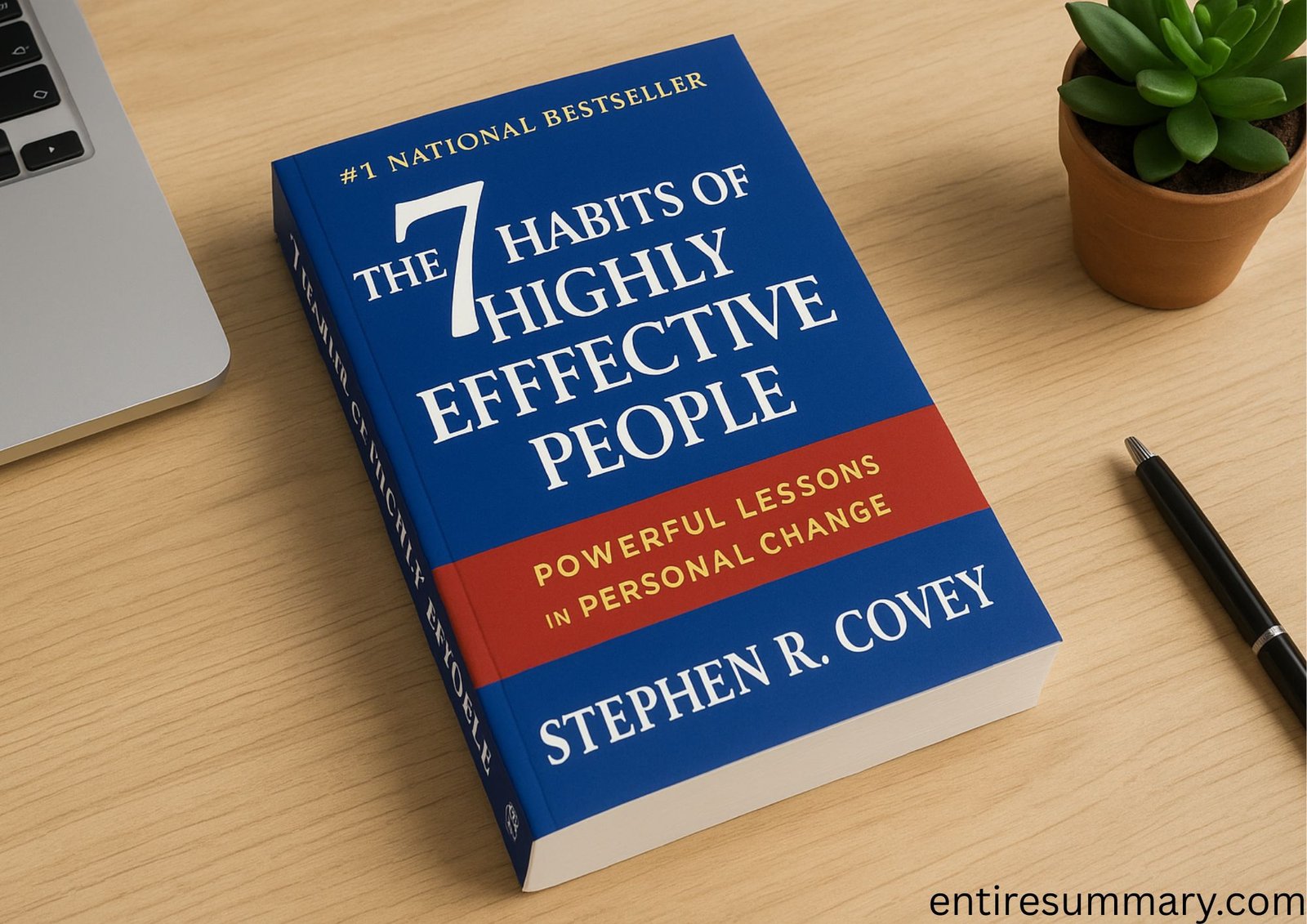
If you’ve ever felt like you’re spinning your wheels, working hard but not getting ahead, then you’ve probably wondered what separates truly successful people from everyone else. This question led me to a classic of the self-help genre: ‘The 7 Habits of Highly Effective People’ by Stephen R. Covey. Published in 1989, it’s a timeless guide to personal and interpersonal effectiveness that has influenced millions. It’s not just a list of tips; it’s a profound shift in thinking.
The First Three Habits: The Private Victory
Covey’s book is built on the idea that true change comes from within. The first three habits focus on personal mastery, what he calls the “Private Victory.” This is about moving from dependence on others to independence. It’s about taking control of your own life before you try to influence anyone else’s.
The first habit is Be Proactive. This is the foundation of the entire book. It means taking responsibility for your own life. Proactive people understand that they are in control of their actions and attitudes, regardless of what happens to them. They take ownership of their issues instead of blaming their problems on other people or outside factors. Instead, they focus their energy on things they can control, their “Circle of Influence,” rather than things they can’t, their “Circle of Concern.” This simple concept is a powerful antidote to a victim mentality.
The second habit is to begin with a clear vision of your destination. This habit is about defining your values and what you want to achieve in life. It’s about creating a personal mission statement. All things, according to Covey, are created twice: first in the mind as an idea, and then in the real world as an actual object.
By visualizing your goals and the person you want to be, you can ensure that your actions are aligned with your deepest values. This habit provides the personal leadership to guide you toward what truly matters.
The third habit is Put First Things First. This is the practical application of the first two. It’s about managing your time and energy based on your priorities. Covey introduces a time management matrix that divides tasks into four quadrants: urgent and important, important but not urgent, urgent but not important, and not urgent and not important. Highly effective people spend most of their time in the second quadrant: important but not urgent. This includes activities like planning, building relationships, and taking care of your health—things that prevent crises from happening in the first place.
The Next Three Habits: The Public Victory
Once you’ve achieved personal independence, you can move on to the “Public Victory.” The next three habits focus on effective collaboration and building strong relationships. This is about moving from independence to interdependence—working effectively with others.
Also read: /atomic-habits/
The fourth habit is Think Win-Win. This habit is about approaching interactions with a mindset of mutual benefit. The idea is to avoid a “win-lose” situation where I get my way and you don’t, as well as a “lose-win” where I give up. The focus is on discovering solutions that benefit all parties. Covey explains that this requires courage and consideration. It’s about building a trusting relationship where both parties feel heard and valued.
The fifth habit is Seek First to Understand, Then to Be Understood. This is arguably the most powerful habit for communication. Most people listen with the goal of formulating a response, rather than with the aim of truly comprehending what is being said. They filter what they hear through their own experiences and biases. Covey urges us to practice “empathic listening”—listening with the intent to truly understand the other person’s perspective, feelings, and needs. Only after you’ve listened fully can you effectively present your own point of view. This habit builds deep trust and opens the door for effective problem-solving.
The sixth habit is Synergize. Working together as a group can produce a result that is greater than the sum of what each person could achieve alone. This habit is about creative cooperation. When people with different strengths and perspectives work together with a win-win mindset and a commitment to empathic communication, they can create new, innovative solutions that are better than what any one person could have come up with alone. Synergy celebrates diversity and teamwork.

The Seventh Habit: Renewal
The final habit enables all the others. It is a habit of renewal, both for yourself and for your relationships. It is the habit of continuous improvement.
The seventh habit is Sharpen the Saw. This habit focuses on protecting and improving your most valuable resource: you. Covey divides this renewal into four dimensions: physical, mental, spiritual, and social/emotional. Physically, it’s about exercise, nutrition, and rest. Mentally, it’s about reading, writing, and continued education. Spiritually, it’s about spending time in nature, meditation, or focusing on your values. Socially/emotionally, it’s about investing time and energy in meaningful relationships. By regularly “sharpening the saw,” you can maintain your energy and effectiveness for all the other habits.
Key Takeaways
- Character Ethic over Personality Ethic: Covey argues that true success comes from a foundation of solid principles like integrity and humility, not from superficial techniques or quick fixes.
- Move from Dependence to Interdependence: The journey from the first habit to the last is a path from relying on others to being self-reliant, and finally to collaborating effectively with others.
- The Importance of Principles: The book is not about a set of rules, but about living by timeless, universal principles that lead to effectiveness and fulfillment.
- Habits are a Process, Not a Destination: The seven habits are not things you do once and check off a list. They involve an ongoing cycle of learning and getting better.
FAQs
1. What does Covey mean by “private victory” and “public victory”?
The “private victory” refers to the first three habits, which focus on personal mastery and moving from dependence to independence. The “public victory” refers to the next three habits, which are about effective teamwork and moving from independence to interdependence.
2. Is the book only for business people?
No, while the book is often used in business settings, its principles are universal. They can be applied to family life, friendships, and personal goals.
3. What is the difference between proactivity and being a go-getter?
Being a go-getter is about taking action, but proactivity is about a deeper sense of responsibility. A proactive person takes responsibility for their attitude and choices, not just their actions.
4. How does this book stand out from other self-help literature?
Unlike many books that offer quick tips or temporary fixes, ‘The 7 Habits’ provides a principle-based framework for long-term character development. It focuses on the roots of behavior, not just the leaves.
5. How can I start applying these habits today?
Start with the first habit, Be Proactive. Instead of reacting to a problem, take a moment to pause and choose your response. Direct your efforts towards things that are within your influence.
6. Is the time management matrix in the book still relevant?
This framework is an invaluable resource for prioritizing tasks by their true significance rather than their immediate demand. It directs your attention to what is genuinely important for long-term success.
7. Does the book offer specific examples for different professions?
Yes, Covey includes a variety of real-life examples from business leaders, parents, and students to illustrate how each habit works in different contexts.

Final Thoughts
‘The 7 Habits of Highly Effective People’ is more than a book; it’s a personal operating system. Although it’s a challenging book to get through, the understanding you gain is well worth the effort. Covey provides a structure for living a more purposeful life guided by core values. If you’re looking for a profound, lasting change, this is the book to start with. I rate it a 10/10 for its timeless wisdom. If you enjoyed this, you might also like ‘Atomic Habits’ by James Clear, which offers a practical guide to building systems for change.