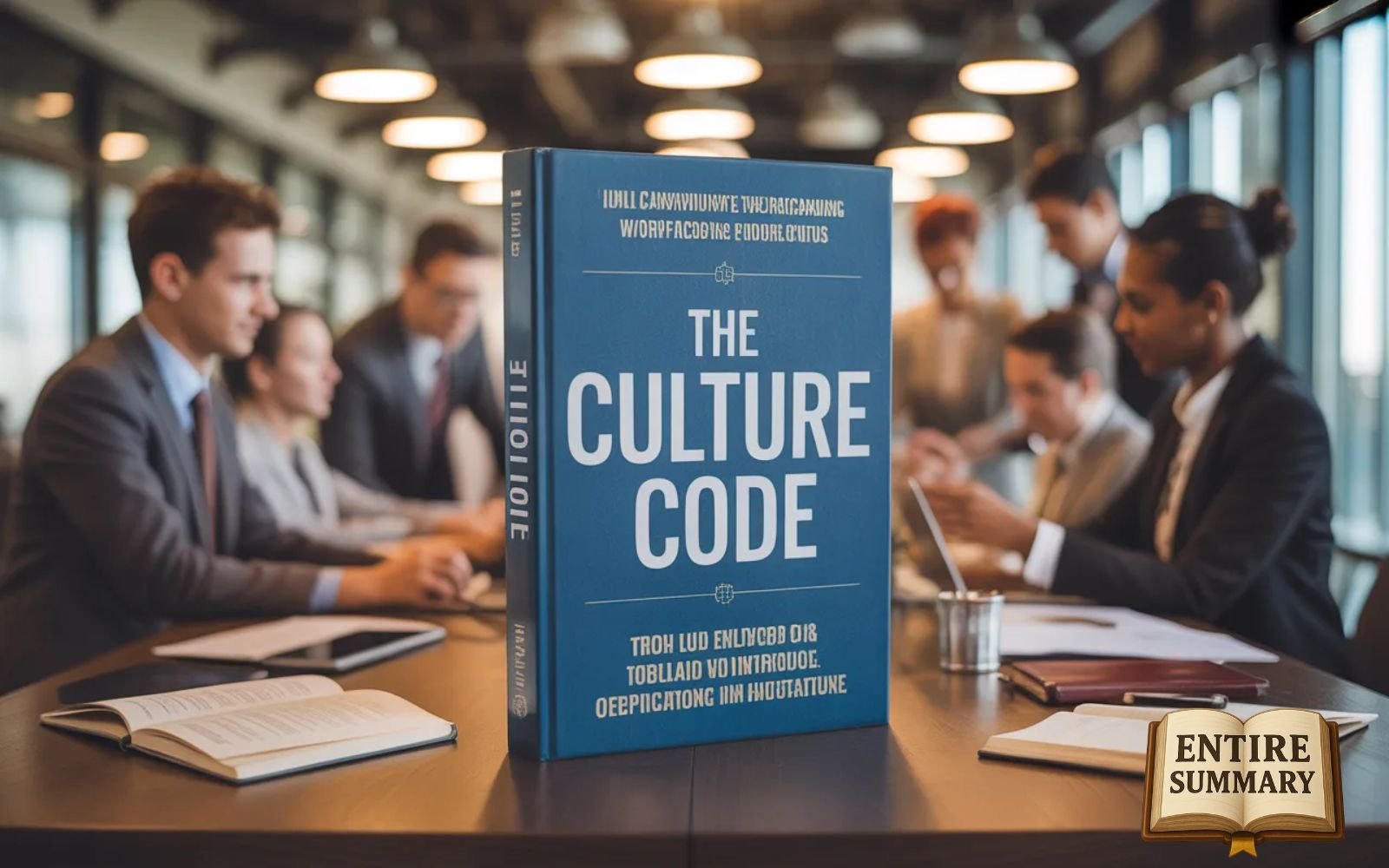
The Culture Code book by Daniel Coyle explores why some organizations thrive while others struggle, even when talent looks similar on paper. Instead of focusing on individual brilliance, this powerful Daniel Coyle book reveals how strong organizational culture shapes behavior, trust, and long-term success. Through real-world examples and research-backed insights, the book shows how leaders can transform everyday interactions into moments that strengthen team culture and drive results. At its core, the message is simple yet profound: culture is built through consistent actions, not lofty statements.
Readers discover how emotional safety, shared purpose, and human connection influence decision-making inside modern workplace culture. By examining how elite teams communicate, solve problems, and support one another, the book offers practical guidance for building environments where people feel valued and motivated. For anyone interested in leadership, collaboration, or improving performance, The Culture Code provides a clear roadmap for creating meaningful, resilient, and high-performing teams.
Introduction
The Culture Code by Daniel Coyle explores why some teams feel unstoppable while others quietly fall apart. This Daniel Coyle book reveals that success rarely comes from raw talent alone. Instead, it grows from everyday behaviors that shape organizational culture and influence how people work together. In today’s American workplace culture, where remote work and rapid change dominate, understanding these hidden forces matters more than ever.
At its core, this Culture Code summary explains how high-performance teams thrive by creating trust, safety, and meaning. Companies that master team culture outperform competitors because they focus on connection, not control. If you want insight into building strong teams, improving leadership and culture, and strengthening company culture, this book delivers practical clarity instead of vague motivation.
About the Author – Daniel Coyle
Daniel Coyle is an award-winning journalist who spent years embedded inside elite organizations. Rather than relying on theory alone, he observed real people inside successful groups. His research spans Google team culture, Pixar, Navy SEALs teamwork, and the MIT Media Lab, giving his work uncommon depth and credibility.
This Daniel Coyle book stands out because it blends neuroscience, psychology, and lived experience. Coyle doesn’t preach. He listens, watches, and translates complex organizational behavior into human language. That’s why his insights on leadership development and team effectiveness resonate strongly with American business leaders and managers.
What Is Organizational Culture?
Organizational culture is the invisible system that shapes how people behave when no one is watching. It includes shared habits, unspoken rules, and emotional signals exchanged during everyday work. Strong company culture doesn’t happen by accident. It forms through repeated interactions that either strengthen or weaken team chemistry.
In healthy workplace culture, people feel safe speaking up, asking questions, and admitting mistakes. In broken cultures, fear quietly replaces curiosity. The Culture Code shows that culture isn’t about perks or posters. It’s about whether people feel valued, connected, and protected inside their group.
What Is The Culture Code About?
The Culture Code by Daniel Coyle explains that culture grows from behavior, not intention. Teams fail when leaders focus on talent alone and ignore how people interact. Coyle shows that collective intelligence emerges when people feel connected and respected, not when they compete for status.
This Culture Code summary highlights one central idea: culture is a living system. It responds instantly to social cues in teams. When leaders ignore these signals, trust erodes. When they nurture them, team collaboration improves naturally without force or pressure.
The Three Core Skills of Highly Successful Groups
Coyle identifies three skills that appear consistently in high-performance teams across industries. These skills allow successful groups to align effort, build trust, and stay resilient under stress. Together, they shape strong organizational culture regardless of industry or size.
The three skills work like gears in the same machine. When one fails, the entire system weakens. When all three operate together, teams experience clarity, confidence, and momentum. These Culture code lessons apply equally to startups, hospitals, schools, and Fortune 500 companies.
Skill 1 – Build Safety
To build safety is to make people feel they belong. Psychological safety allows individuals to take risks without fear of humiliation. The Culture Code shows that create psychological safety is the foundation of team effectiveness, innovation, and engagement. Without it, talent stays silent.
Coyle introduces belonging cues, which are subtle behaviors that signal acceptance. These cues include eye contact, listening, warmth, and respect. When teams build safety in teams, trust in teams grows naturally. This sense of group belonging fuels collaboration and loyalty over time.
How to Build Safety in Teams
Leaders shape safety through actions, not speeches. Foster team trust by inviting input, admitting uncertainty, and responding calmly to mistakes. Research from Harvard research teams shows that teams with high team safety outperform others even when members have average skills.
Case studies like Zappos company culture and Gregg Popovich leadership reveal how leaders create safe work environment by emphasizing connection. Tony Hsieh believed that collisions, or unplanned interactions, drive creativity. These small social moments strengthen workplace trust and employee engagement far more than rigid rules ever could.
Skill 2 – Share Vulnerability
Vulnerability sounds risky, but it fuels cooperation. Coyle explains that teams succeed when members share vulnerability early and often. This openness triggers the vulnerability loop, where trust deepens through mutual honesty rather than authority.
Examples like United Airlines Flight 232 show how humble communication saved lives. Crew members didn’t rely on rank. They relied on collective effort over individual talent. When people encourage vulnerability, they unlock collective intelligence and create strong team relationships that endure pressure.
How Leaders Can Encourage Vulnerability
Strong leadership and culture grow when leaders go first. In The Culture Code book, Daniel Coyle explains that leaders who encourage vulnerability unlock deeper trust and stronger team collaboration. When leaders openly admit mistakes, ask for help, or say “I don’t know yet,” they send powerful real-time signals that it’s safe to be human. This behavior strengthens workplace trust and improves team effectiveness across all levels.
A famous example comes from Gregg Popovich leadership in the NBA. Popovich regularly invites feedback from players, even young ones. This habit improves group dynamics and proves that collective effort over individual talent wins. Vulnerability is not weakness. It is a leadership tool that fuels employee engagement, team chemistry, and a resilient high-trust workplace.
Skill 3 – Establish Purpose
Purpose gives meaning to effort. In The Culture Code summary, purpose acts like a compass that aligns shared goals, core values, and daily behavior. Teams perform better when they know why their work matters. Purpose transforms routine tasks into meaningful contributions and strengthens organizational culture from the inside out.
Coyle highlights that purpose is not a slogan on a wall. It is reinforced through stories, rituals, and consistent decisions. Johnson & Johnson Credo is a classic example. The Credo guided leaders during real crises and shaped long-term company culture. Purpose-driven teams show higher collective intelligence, clearer team communication, and stronger commitment under pressure.
How to Create a Strong Sense of Purpose
Creating purpose starts with clarity. Leaders must establish a clear purpose that explains who the team serves and why. In strong workplace culture, purpose is repeated often and modeled daily. Employees should hear it in meetings, see it in decisions, and feel it in recognition systems. This consistency improves organizational behavior and long-term performance.
Research from Harvard research teams shows that teams with purpose outperform others even when resources are limited. Purpose also increases sense of belonging at work, especially in diverse environments. When people feel their work contributes to something larger, team safety increases and motivation becomes internal rather than forced.
Key Takeaways from The Culture Code
One core lesson from The Culture Code book is that culture is built in moments, not mission statements. Small moments of connection shape team culture more than policies do. Culture grows through everyday behaviors like listening well, showing respect, and responding quickly to concerns. These habits create a safe work environment where people thrive.
Another key insight is that successful groups focus on relationships first. Talent matters, but building strong teams matters more. High-performing organizations invest in trust in teams, team communication, and shared responsibility. These culture code lessons apply across industries, from startups to healthcare systems.
Popular Quotes from The Culture Code
Daniel Coyle’s writing resonates because it is practical and human. One widely shared quote states that culture is not something you are, it is something you do. This idea reinforces how culture building strategies depend on action, not intention. Words alone never shape workplace culture.
Another memorable line highlights that safety is the foundation of growth. This supports decades of organizational behavior research and aligns with findings from MIT Media Lab on collective intelligence. Quotes like these help leaders translate theory into daily leadership choices that improve team management strategies.
How to Apply The Culture Code in Real Organizations
Applying The Culture Code summary requires intention and patience. Leaders must observe daily interactions and reinforce positive social cues in teams. Tools like regular check-ins, peer recognition systems, and open feedback loops strengthen team effectiveness. Technology such as team communication tools and collaboration software can support these habits when used thoughtfully.
Case studies like Zappos company culture under Tony Hsieh show how values-driven decisions shape strong company culture. Zappos prioritized social connection at work, even during rapid growth. Their approach proves that how to improve company culture starts with leadership behavior, not software alone.
FAQs About The Culture Code
What is The Culture Code about?
The Culture Code explains how strong organizational culture is built through trust, belonging, and shared purpose. Daniel Coyle shows that small behaviors, not talent alone, create successful teams.
Is The Culture Code a good book for leaders?
Yes, it’s highly valuable for leaders who want to improve team culture and performance. The book offers practical lessons on leadership, communication, and building high-trust workplaces.
What are the three key skills in The Culture Code?
The three skills are building safety, sharing vulnerability, and establishing purpose. Together, they strengthen team trust, collaboration, and long-term success.
What does psychological safety mean in The Culture Code?
Psychological safety means team members feel safe to speak up, ask questions, and make mistakes. It helps teams learn faster and perform better without fear.
Can The Culture Code help improve company culture?
Yes, the book provides actionable strategies to improve company culture, employee engagement, and teamwork. Its ideas apply to businesses of all sizes.
Is The Culture Code based on real examples?
Yes, Daniel Coyle supports his ideas with real-world examples from companies, sports teams, and military groups, making the lessons practical and credible.
Conclusion
In conclusion, The Culture Code book shows that lasting success doesn’t come from talent alone but from how people connect, communicate, and work together every day. Daniel Coyle clearly explains how strong organizational culture is built through trust in teams, shared purpose, and consistent human behavior. The book’s focus on psychological safety, share vulnerability, and sense of belonging at work makes it especially relevant for modern workplaces where team collaboration matters more than hierarchy. What makes this book powerful is its practicality, as the lessons can be applied by leaders, managers, and teams at any level.
Whether you want to strengthen team culture, improve company culture, or create a healthier safe work environment, the ideas are easy to understand and implement. Backed by real examples and research, The Culture Code offers timeless insights into leadership and culture. For anyone serious about building strong, connected, and high-performing teams, this book is a worthwhile and impactful read.