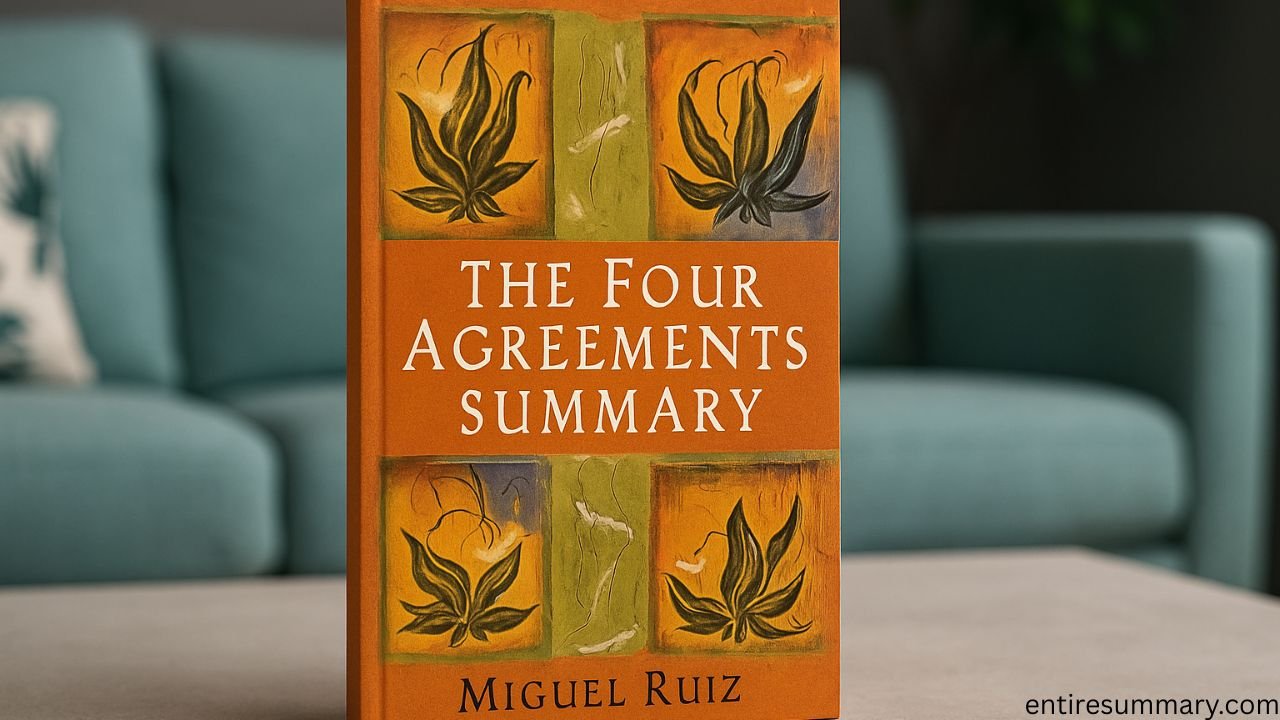
“The Four Agreements: A Practical Guide to Personal Freedom” by Don Miguel Ruiz is a spiritual self-help book rooted in ancient Toltec wisdom. It teaches four simple yet powerful principles that can transform the way we think, communicate, and live. Here’s a structured summary of its core lessons and enduring impact.
First Half Summary (Key Events and Themes)
Ruiz begins the book by painting a picture of the “domestication” of humans. From childhood, people are taught societal rules, values, and expectations. While some guidance is helpful, much of it conditions us to accept limiting beliefs and self-judgments that shape our reality. Ruiz calls this “the dream of the planet,” where everyone participates in shared agreements that define how we live and how we see ourselves.
This sets the stage for the Four Agreements, introduced as a way to break free from unnecessary suffering.
- First Agreement: Be Impeccable with Your Word
Ruiz stresses the power of language. Words can create, heal, or destroy. Using your word with integrity means to be impeccable, which involves steering clear of gossip, lies, and negative self-talk. Speaking truthfully and kindly is not just about communication but also about creating a healthier internal dialogue. - Second Agreement: Don’t Take Anything Personally
Many conflicts come from interpreting others’ words and actions as personal attacks. Ruiz explains that people’s reactions are shaped by their own beliefs and struggles, not by you. Learning not to take things personally frees you from needless anger and emotional pain.
Also read: /the-art-of-thinking-clearly-summary/
By the halfway point, the book makes it clear: by practicing these two agreements, readers can start shedding the toxic patterns that society’s “dream” imposes. These principles offer the foundation for living with greater freedom, peace, and self-respect.

Second Half Summary (Climax to Ending)
In the second half, Ruiz introduces the final two agreements, expanding the path toward inner freedom.
- Third Agreement: Don’t Make Assumptions
Ruiz highlights how assumptions often lead to misunderstandings, resentment, and conflict. Instead of guessing what others mean or feel, he encourages us to ask questions and communicate clearly. By refusing to assume, relationships improve, and trust deepens. - Fourth Agreement: Always Do Your Best
The last agreement ties everything together. Doing your best doesn’t mean perfection—it means showing up fully with the effort you can give in any moment.Ruiz points out that what we consider our best effort can vary based on our circumstances, health, and energy levels. Consistently doing our best prevents regret and self-judgment, while also reinforcing the other three agreements.
The book closes by stressing that transformation is possible for anyone. Ruiz reminds readers that breaking old patterns is not easy, but with practice, these agreements can dissolve years of harmful conditioning. The “new dream” he proposes is one of love, freedom, and personal empowerment.
Ultimately, The Four Agreements ends with a message of hope: freedom isn’t found outside ourselves but through conscious choices in how we think, speak, and act.

FAQs About The Four Agreements
1. What is The Four Agreements about?
It’s a guide to personal freedom, offering four principles to help people live with less stress, fear, and conflict.
2. Who is the author of the book?
The book was written by Don Miguel Ruiz, a Mexican spiritual teacher drawing on Toltec wisdom.
3. What are the Four Agreements?
Be impeccable with your word, don’t take anything personally, don’t make assumptions, and always do your best.
4. Could you clarify what is meant by “be impeccable with your word?
It means speaking truthfully and kindly, avoiding harmful gossip or self-criticism.
5. Why shouldn’t we take things personally?
Because people’s actions reflect their own reality, not yours. Freeing yourself from this assumption reduces suffering.
6. How do assumptions harm relationships?
They create misunderstandings and unnecessary conflicts. Clear communication prevents this.
7. How would you put the concept of “always doing your best” into action?
It means giving your best effort in each moment, without demanding perfection from yourself.
8. Is the book religious?
No. It draws on ancient Toltec spirituality but presents practical, universal lessons.
9. Why is this book considered life-changing?
Because its four agreements offer simple, actionable tools to reduce stress and improve relationships.
10. Can children or teens benefit from the book?
Yes. The agreements are simple enough for young readers and can help them build confidence early on.
11. What is the “dream of the planet” mentioned in the book?
It refers to the collective beliefs and rules imposed by society that shape our behavior and self-image.
12. Does the book suggest we can be completely free of suffering?
Ruiz suggests we can greatly reduce suffering by changing our agreements and choosing love over fear.
13. What is the time frame for mastering the four agreements?
Change doesn’t happen overnight, but with consistent practice, they can become natural habits.
14. Is the book more practical or philosophical?
It blends both, offering deep spiritual insight along with practical daily applications.
15. Who should read The Four Agreements?
Anyone looking for clarity, peace, or better relationships can benefit, regardless of background.
