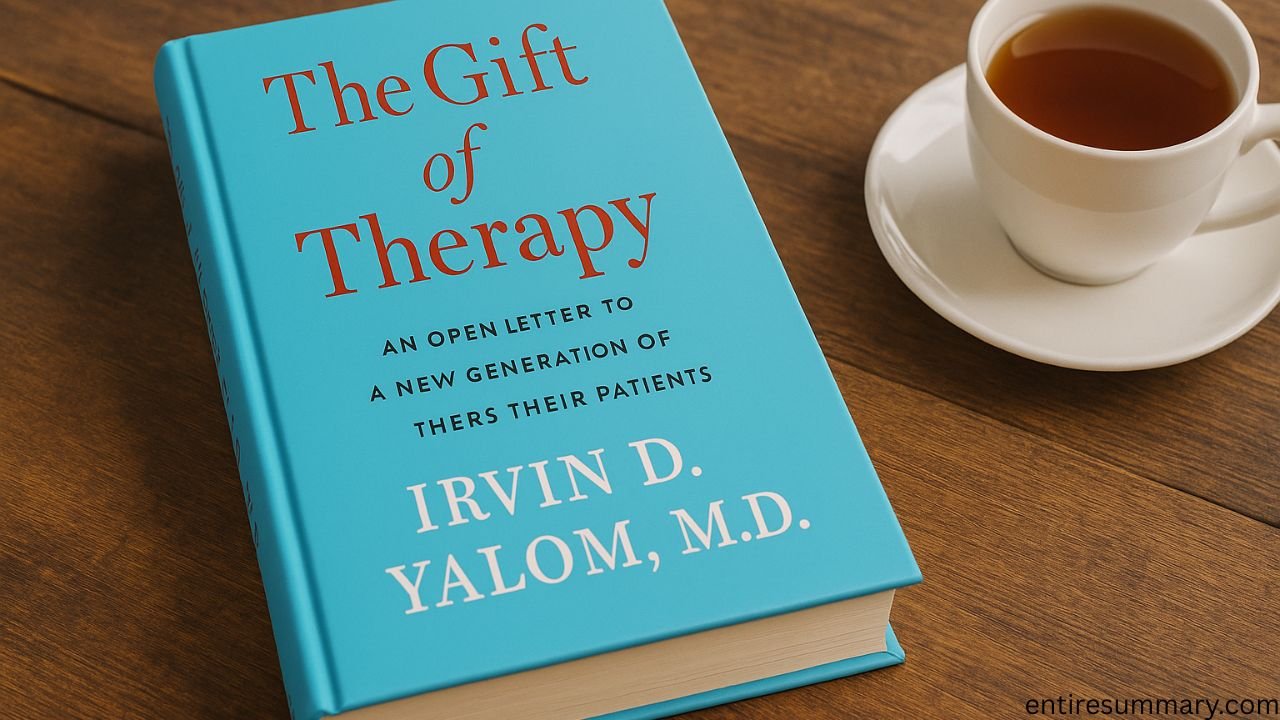
The Gift of Therapy by Irvin D. Yalom is a strong guide for the practical and philosophical aspects of psychotherapy. Written by one of the most respected psychiatrists in the world, this book blends memoir, self-help, and professional wisdom. Yalom shares over three decades of experience in over 80 short chapters, offering insights not only for therapists but also for anyone interested in personal growth, relationships, and the healing process.
First Half Summary: The Gift of Therapy
The first half of The Gift of Therapy sets the tone by showing Yalom’s unique approach to psychotherapy. Instead of presenting therapy as a rigid science, he treats it as a deeply human encounter between two people.
- According to Yalom, the key to healing in therapy is the relationship between the therapist and the patient. He argues that techniques are helpful, but what matters most is the authentic bond between therapist and patient.
- He encourages therapists to use themselves as instruments in therapy. This means being open, honest, and transparent about feelings, even when that includes vulnerability.
- Early chapters highlight the importance of listening deeply and letting silence do its work. Yalom reminds us that sometimes the most profound healing happens when nothing is said, but everything is felt.
- He encourages therapists to be authentic and avoid acting like they’re hiding behind a professional persona. Authenticity, he believes, creates trust and connection.
Yalom also shares memorable case stories. For example, he describes working with patients facing death and how those experiences shaped his belief that existential concerns — death, freedom, isolation, and meaning — are at the heart of human suffering.
Also read: /lost-connections/
A consistent theme is the idea that therapy should be a joint effort between the therapist and the client. Instead of acting as an authority who “fixes” the patient, the therapist should walk alongside them, exploring struggles together.
By the midpoint of the book, readers understand Yalom’s philosophy: therapy is not about applying formulas but about fostering human connection, honesty, and growth.

Second Half Summary: From Climax to Ending
In the second half, Yalom expands on the deeper themes of therapy while offering practical advice for both therapists and readers interested in self-discovery.
- He explores the existential dimension of therapy, encouraging people to confront mortality rather than avoid it. Facing the reality of death, he argues, can inspire people to live more meaningfully.
- Yalom highlights the idea of “instilling hope” in patients. Even when problems feel overwhelming, the act of being heard and understood can spark hope for change.
- Another major theme is the importance of here-and-now interactions. Yalom encourages therapists to focus not just on what patients describe from their past but also on how they relate in the therapy room itself. This real-time dynamic often reveals more than distant memories.
- He offers guidance on handling boundaries, like when or whether to self-disclose, and how to balance empathy with professionalism.
Through more stories, Yalom illustrates therapy with patients who struggled with loneliness, guilt, and meaninglessness. He shows how therapy can help individuals see their problems in a new light, break old patterns, and embrace life’s uncertainties.
The book concludes with a clear, compassionate message: therapy is a gift, not just for patients but also for therapists. Every encounter is an opportunity for growth, connection, and shared humanity. Yalom leaves readers with the belief that healing is possible when two people meet with openness, honesty, and courage.
Key Takeaways
- Therapy is about connection, not just technique.
- Existential issues — death, freedom, isolation, meaning — are central to human struggles.
- Authenticity and vulnerability from the therapist encourage trust.
- Healing often happens in the present moment between therapist and patient.
- Therapy is not only a service to patients but also a gift for therapists, shaping their own humanity.

FAQs About The Gift of Therapy
1. Who wrote The Gift of Therapy?
Irvin D. Yalom, a renowned psychiatrist and psychotherapist.
2. What genre is the book The Gift of Therapy?
It’s a blend of memoir, professional guide, and self-help.
3. How is the book The Gift of Therapy structured?
The book is composed of 85 brief chapters, with each one providing insights or lessons from Yalom’s work as a therapist.
4. Who is the book The Gift of Therapy for?
Both therapists and general readers interested in psychology, healing, or personal growth.
5. What is Yalom’s main message?
That the therapeutic relationship itself is the most powerful tool for healing.
6. What themes are central in the book The Gift of Therapy?
This book explores fundamental human anxieties such as mortality, liberty, loneliness, and the pursuit of a meaningful life.
7. Does Yalom use case studies?
Yes, he shares many stories from his patients (with identities protected) to illustrate ideas.
8. What makes this The Gift of Therapy unique?
Its honesty, accessibility, and focus on the human side of therapy rather than just clinical technique.
9. Can non-therapists benefit from reading The Gift of Therapy?
Absolutely — the lessons about authenticity, relationships, and meaning apply to everyone.
10. Why is it called The Gift of Therapy?
Because therapy is not just a process of healing patients, but also a gift for therapists, enriching their lives and perspectives.
