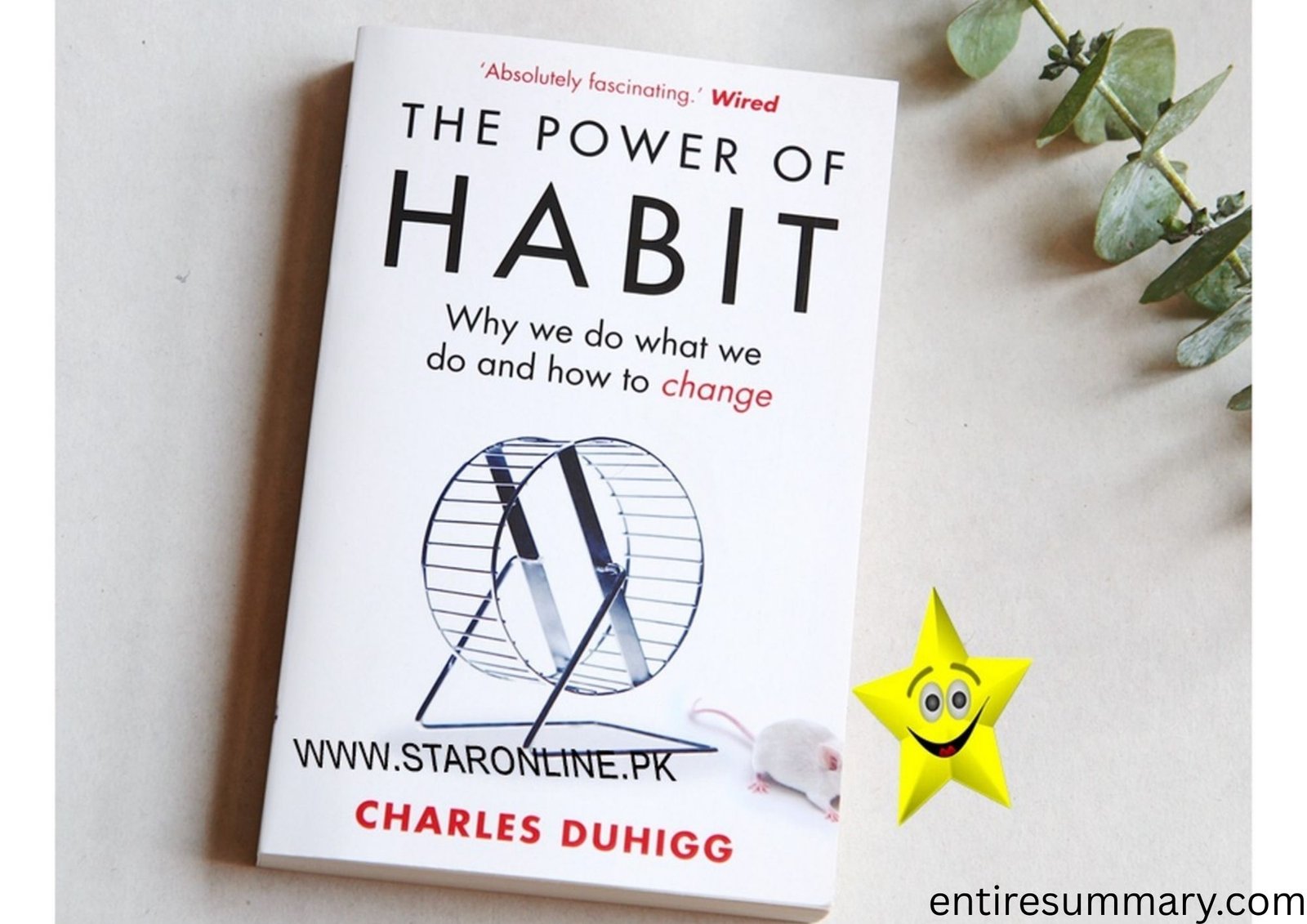
The Power of Habit delves into the scientific principles behind how our habits are formed and how we can change them. This book has become a cornerstone for understanding how habits shape our lives, from individual behaviors to the success of organizations. Here is a summary of its core ideas and important events.
Duhigg starts by introducing the habit loop, a three-part neurological process at the core of every habit. All habits are formed through a simple, three-step loop: a cue, a routine, and a reward.. A cue is simply a signal that prompts your brain to switch to autopilot and start a specific behavior. The routine is the behavior itself, whether it’s physical, mental, or emotional. The reward is the positive outcome that reinforces the habit, making your brain want to repeat the cycle again. He illustrates this concept through the story of a woman named Lisa Allen, who turned her life around by identifying and changing her habits. By focusing on the cue and reward, she was able to replace destructive routines with positive ones, eventually losing weight and building a successful career. This personal story serves as a powerful example of how understanding the habit loop can lead to profound personal transformation.
The Power of Habit then expands its focus from individuals to organizations and societies. Duhigg introduces the concept of keystone habits—small changes or habits that have the power to start a chain reaction, leading to other, more widespread positive habits. The Power of Habit uses the example of Paul O’Neill, the CEO of Alcoa, who transformed the company’s culture and profitability by focusing on a single keystone habit: worker safety. By making safety the top priority, O’Neill not only reduced accidents but also improved communication, quality control, and efficiency across the board. The focus on safety created a ripple effect that touched every part of the company.
Also read: /the-interpretation-of-dreams/
Another key part of the book explores how marketers and companies use our understanding of habits to influence consumer behavior. Duhigg reveals how Target used data mining to predict a customer’s pregnancy, sending them targeted ads before they even told their family. The Power of Habit shows how businesses leverage the habit loop to create new consumer routines. The book also delves into how social movements, like the civil rights movement, were built on the foundation of social habits and community networks. Duhigg argues that the movement succeeded partly because it changed the social habits of communities, making it easier for people to participate and support the cause. This broader perspective shows how the principles of habits extend far beyond individual psychology.

The second half of The Power of Habit focuses on the concept of belief and how it is crucial for habit change. Duhigg shares the story of Alcoholics Anonymous (AA) and its effectiveness. He explains that AA’s success lies in its ability to instill a new belief in its members—the belief that they can change. The program provides a new routine (attending meetings, talking with a sponsor) and a new reward (sobriety, community), but the key element is the group support that helps people believe in the possibility of a different future. This belief makes it possible for individuals to stick with the new routines even when faced with stress or old cues.
Duhigg also discusses how companies can change their habits in response to a crisis. The Power of Habit uses the story of Starbucks, which developed a new training program to help employees manage stressful situations. Starbucks developed new training that taught its employees how to handle difficult situations with customers and other unforeseen issues, which in turn established new behaviors for its staff. This new training program helped employees replace negative emotional reactions with more professional and positive ones. The company’s success, he argues, was not just in their products but in the habits they instilled in their employees, which led to better customer service and brand loyalty. The final chapters of the book tie everything together, showing that habits are not destiny. They can be changed with effort and understanding. Duhigg highlights that even though we can’t always control the trigger or the payoff of a habit, we absolutely have the ability to select the action we take. By being mindful of our habit loops, we can take control of our lives.
Key Takeaways
- The Habit Loop is Fundamental: All habits, good or bad, are built on a simple neurological pattern: Cue, Routine, Reward. Understanding this loop is the first step to changing any behavior.
- Keystone Habits Matter: Focusing on one small, foundational habit can create a ripple effect, leading to widespread positive changes in your life or an organization.
- Belief is the Key to Change: Changing a deeply ingrained habit, especially a destructive one, requires not just a new routine but also a fundamental belief in your ability to change. Building this belief often requires a strong support system.
- Habits Are Not Destiny: We can actively choose to change our habits. While the cues and rewards may be fixed, we have the power to consciously choose a new routine to replace the old one.

FAQs
What is a habit loop and how can I identify my own?
A habit loop is a three-part process: a cue (trigger), a routine (the behavior), and a reward (what your brain gets out of it). You can identify your own by keeping a journal. When you find yourself doing a specific behavior, write down what triggered it and what you felt or got out of it afterward.
What is a keystone habit?
A keystone habit is a single habit that, when changed, has the power to trigger a cascade of other positive changes in your life. An example is exercising regularly, which often leads to healthier eating, better sleep, and more productivity.
How do companies use habit loops to influence me?
Companies use habit loops by creating a cue (like a notification), a routine (opening the app), and a reward (social connection, a funny video). They are experts at creating and reinforcing these loops to keep you engaged with their products.
How can I use the ideas from this book in my own life?
Begin by choosing a single habit you’d like to alter. Map out its cue, routine, and reward. After that, purposefully substitute the old routine with a new action that provides a comparable sense of satisfaction. For instance, if you get a craving for a snack (cue), try going for a walk (new routine) instead of eating it, which gives you a feeling of accomplishment (similar reward).
What role does belief play in habit change?
Belief is critical, especially for overcoming destructive habits. Changing a deeply ingrained habit takes more than just a new routine; you have to truly believe that a different outcome is within your reach. This is why support groups and a community can be so effective.
Does the book suggest that habits are deterministic?
No, the book strongly argues the opposite. While it shows how habits are powerful, it also emphasizes that we have the power to consciously change them. Our habits are not our destiny.
Is “The Power of Habit” more for personal or business use?
It’s for both. The book uses examples from individuals, large corporations, and even social movements to illustrate how the same principles of habit formation apply at every level. The insights are equally useful for someone trying to quit smoking or a CEO trying to change their company’s culture.
Final Thoughts
The Power of Habit is a genuinely insightful read that is both practical and thought-provoking. It’s a 9/10 for its clear explanations and powerful real-world examples. If you’re interested in understanding what makes you and the world around you tick, this is a must-read. If you enjoyed this book, you might also like “Atomic Habits” by James Clear, which offers a more step-by-step guide to building good habits.